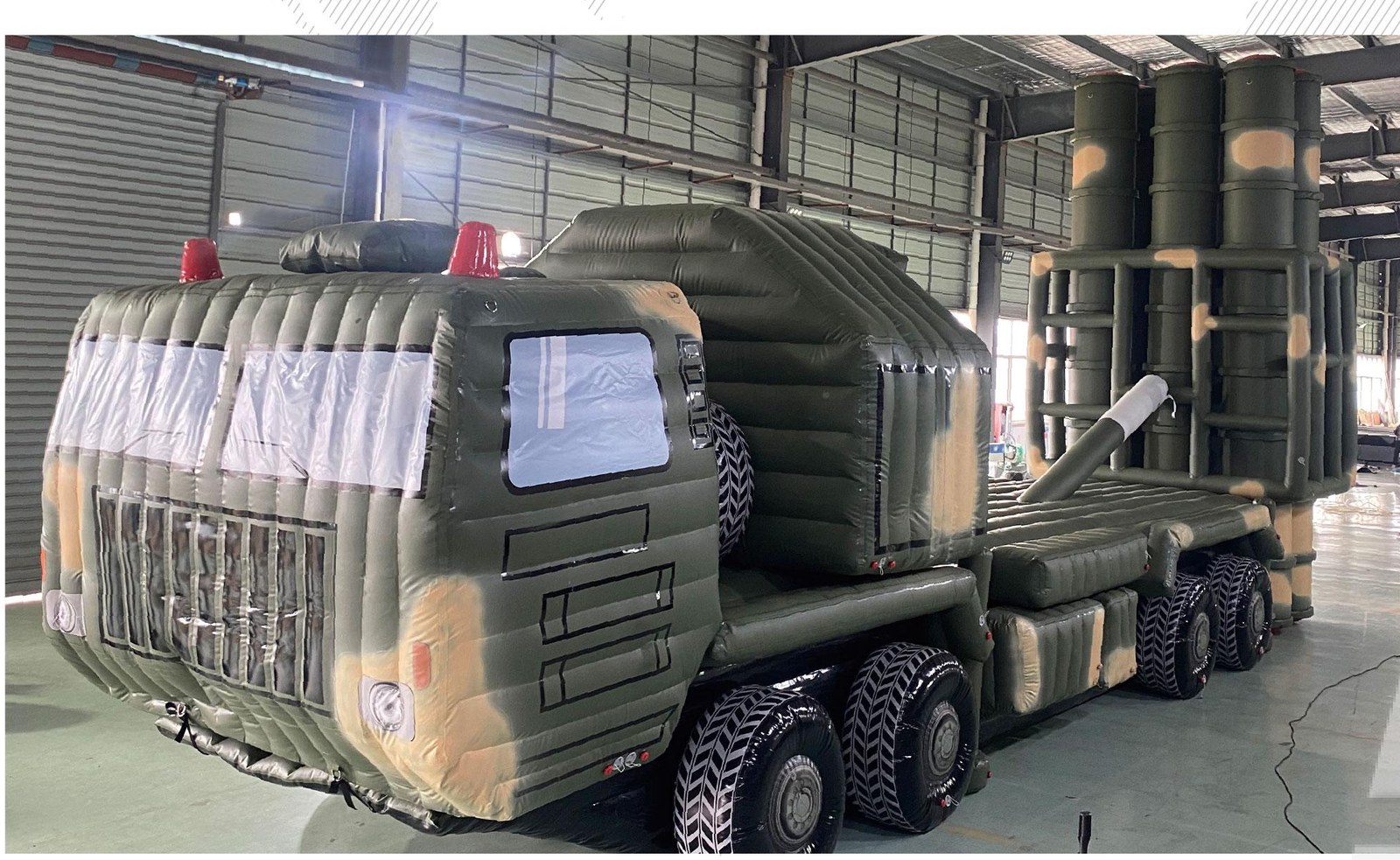
An air-defence position is among the first things reconnaissance looks for and one of the first targets a strike package is briefed against. The cheaper question is not how to survive that attention, but how to make it fall somewhere else.
A whole chain, not a single vehicle
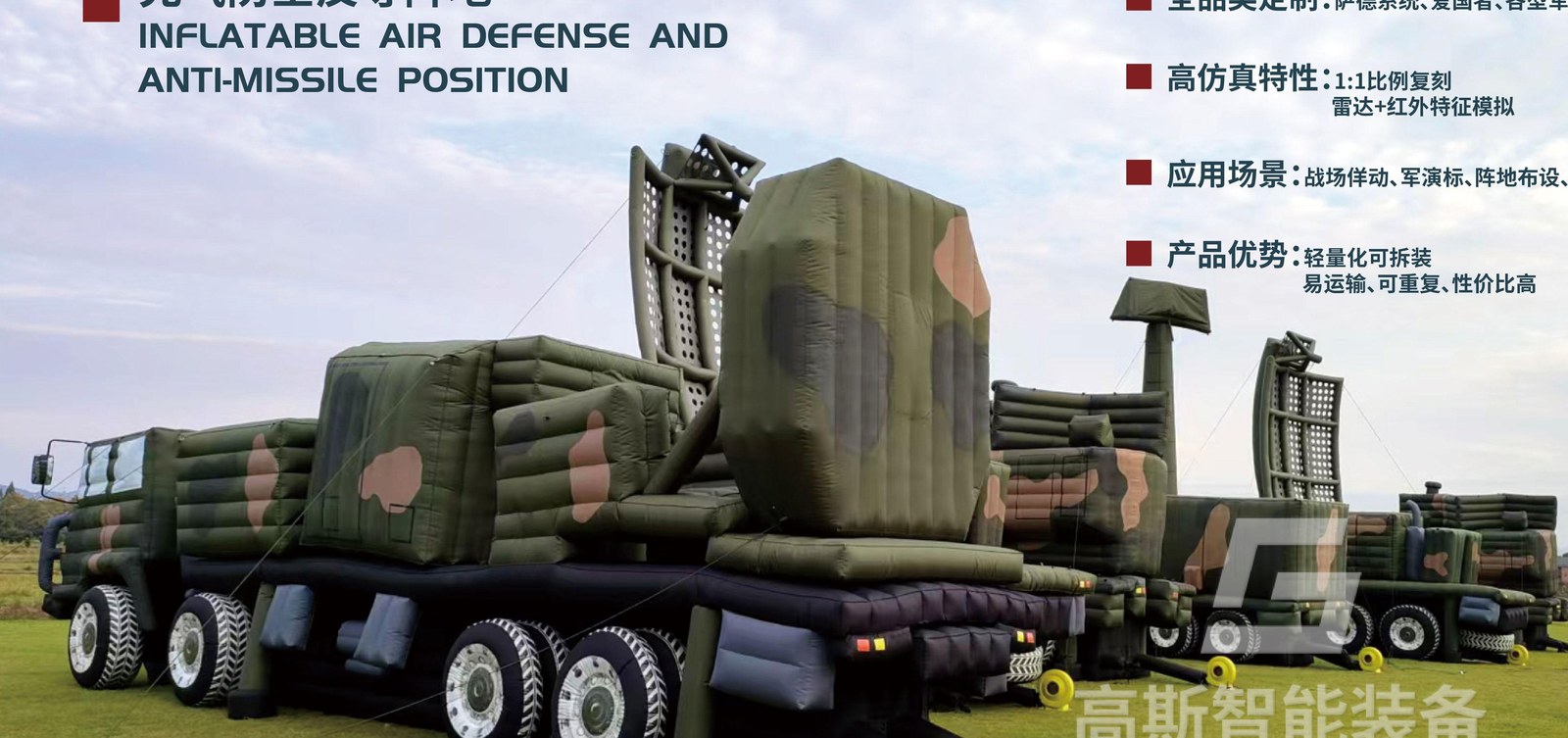
A convincing decoy site is not one radar standing in a field. It is a layout an analyst will accept as a working air-defence node: acquisition and fire-control radars, launchers on their trailers, command and support vehicles, and the gun line that closes the short-range end.
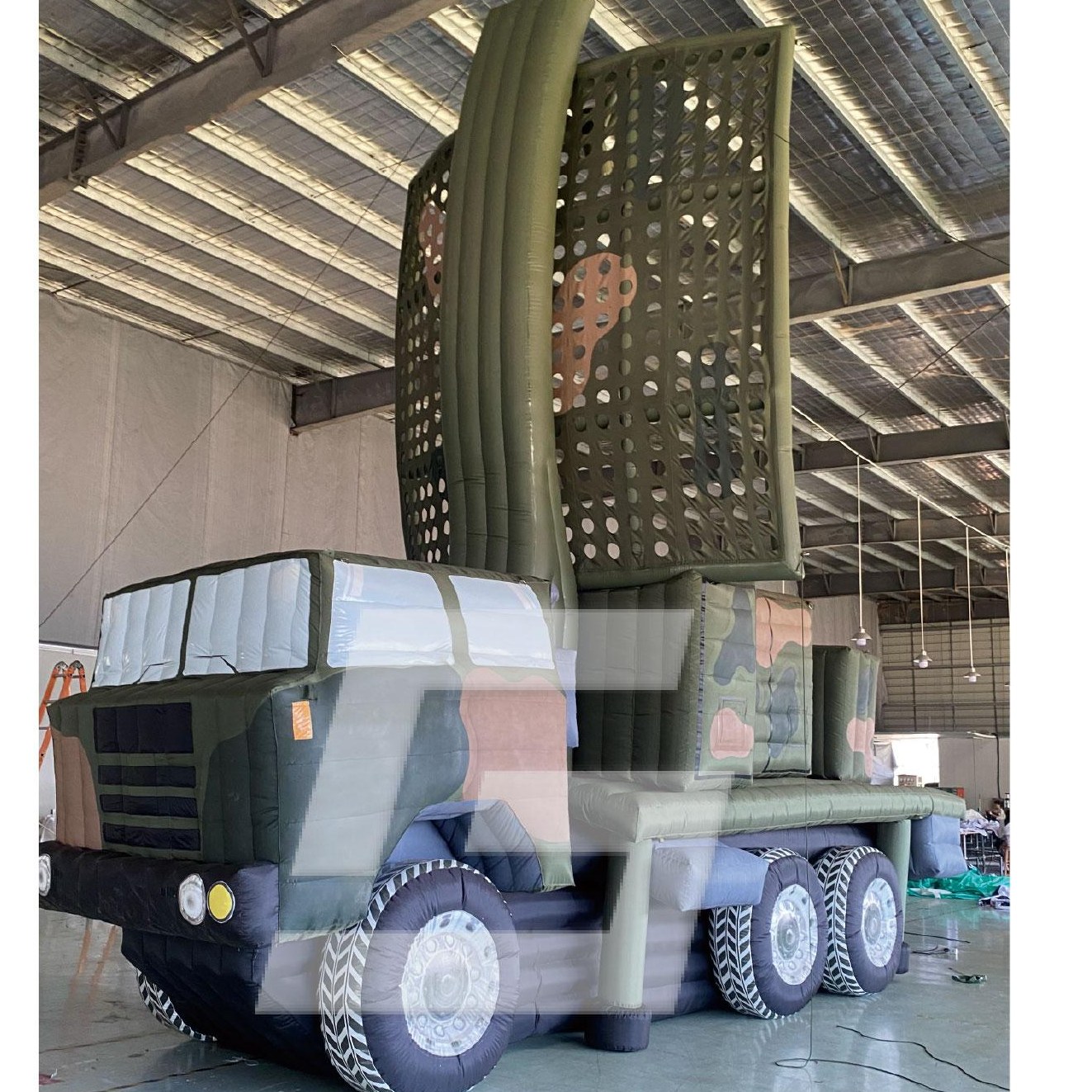
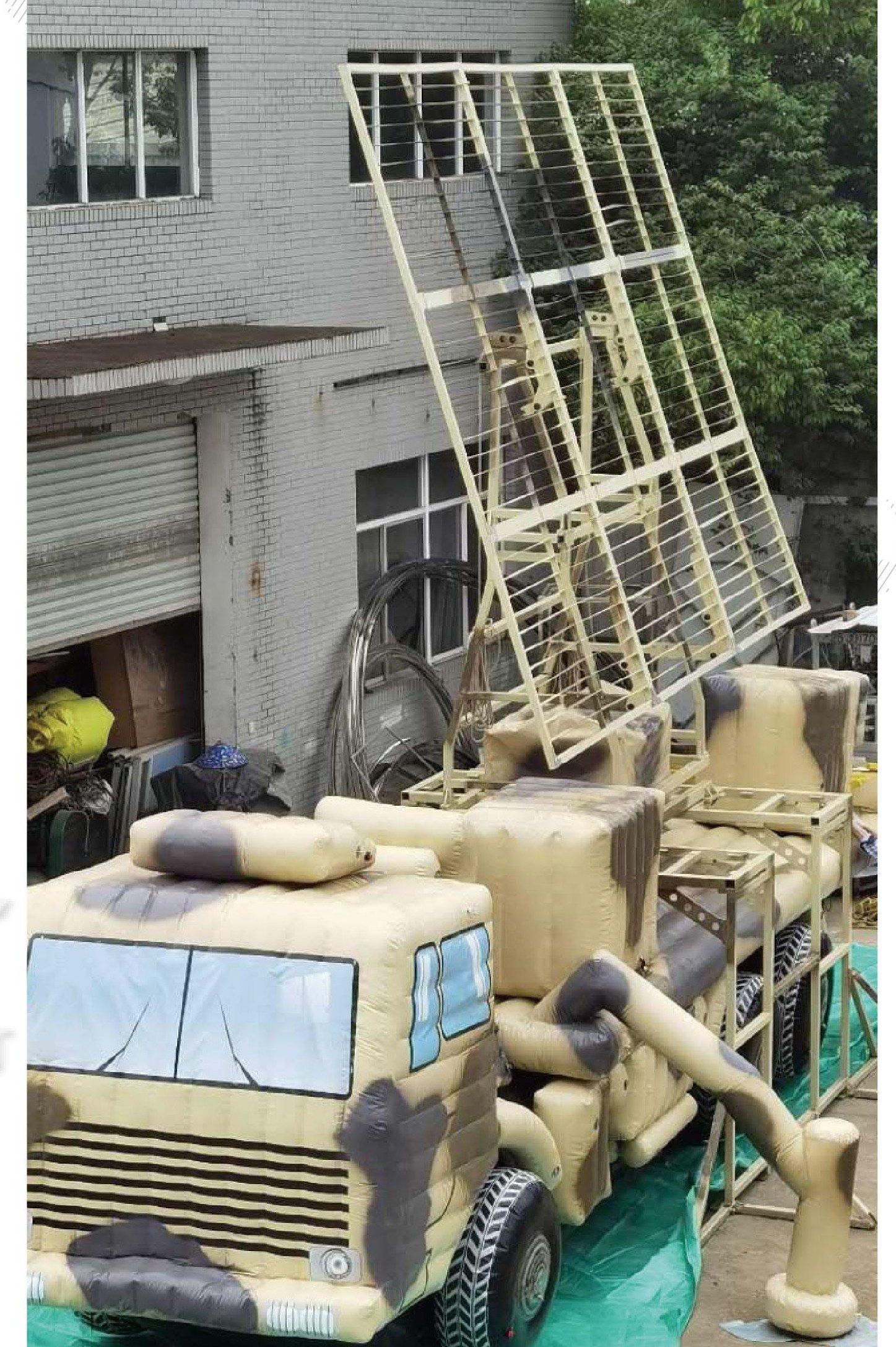
- Acquisition and fire-control radar vehicles, antenna raised and sweeping
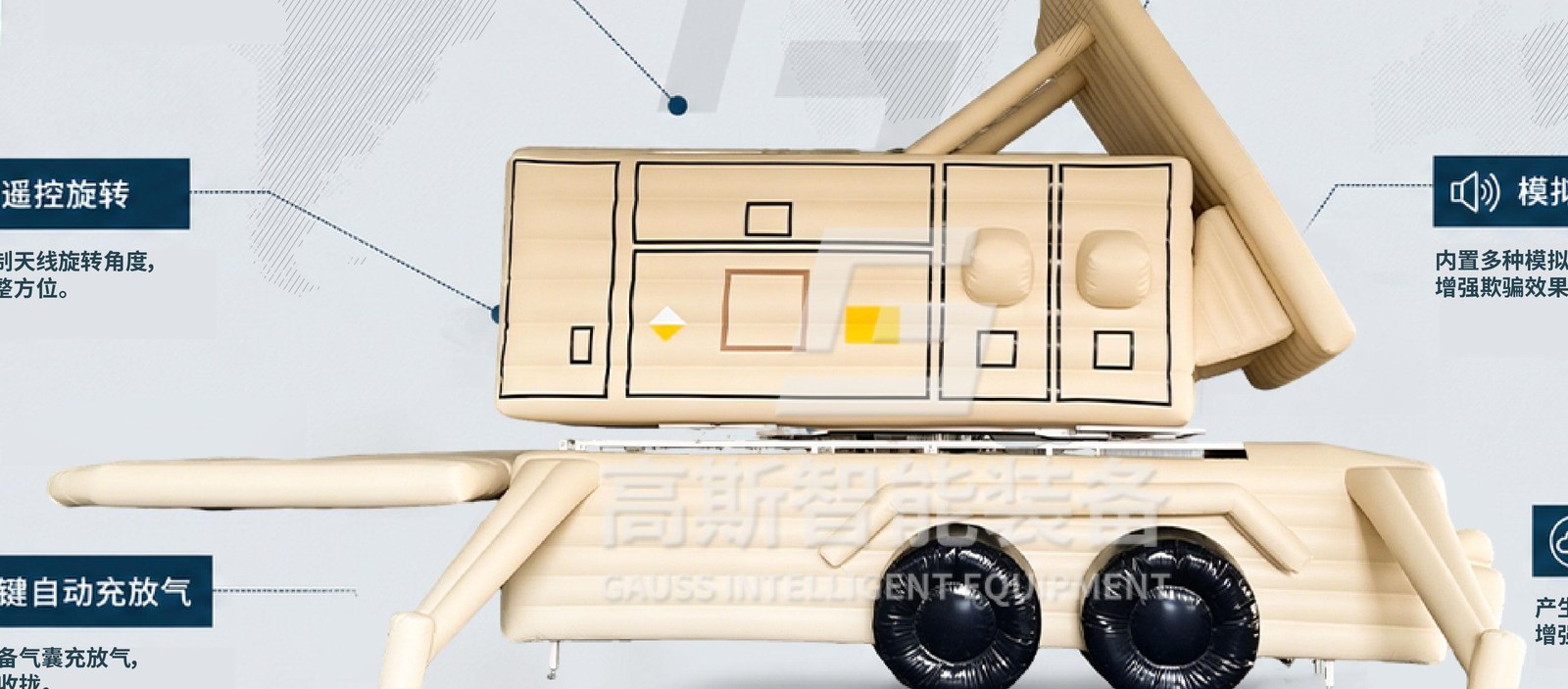
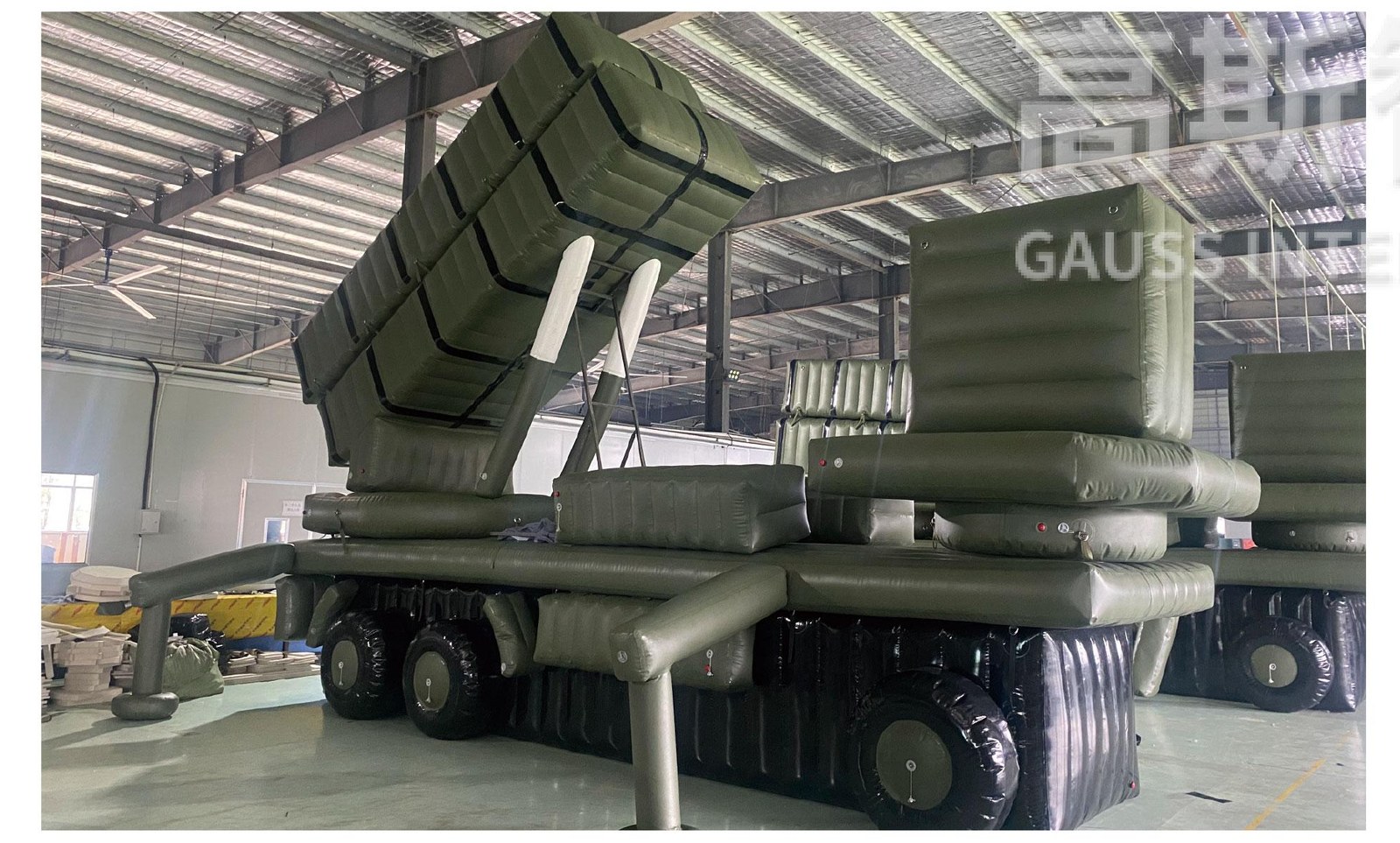
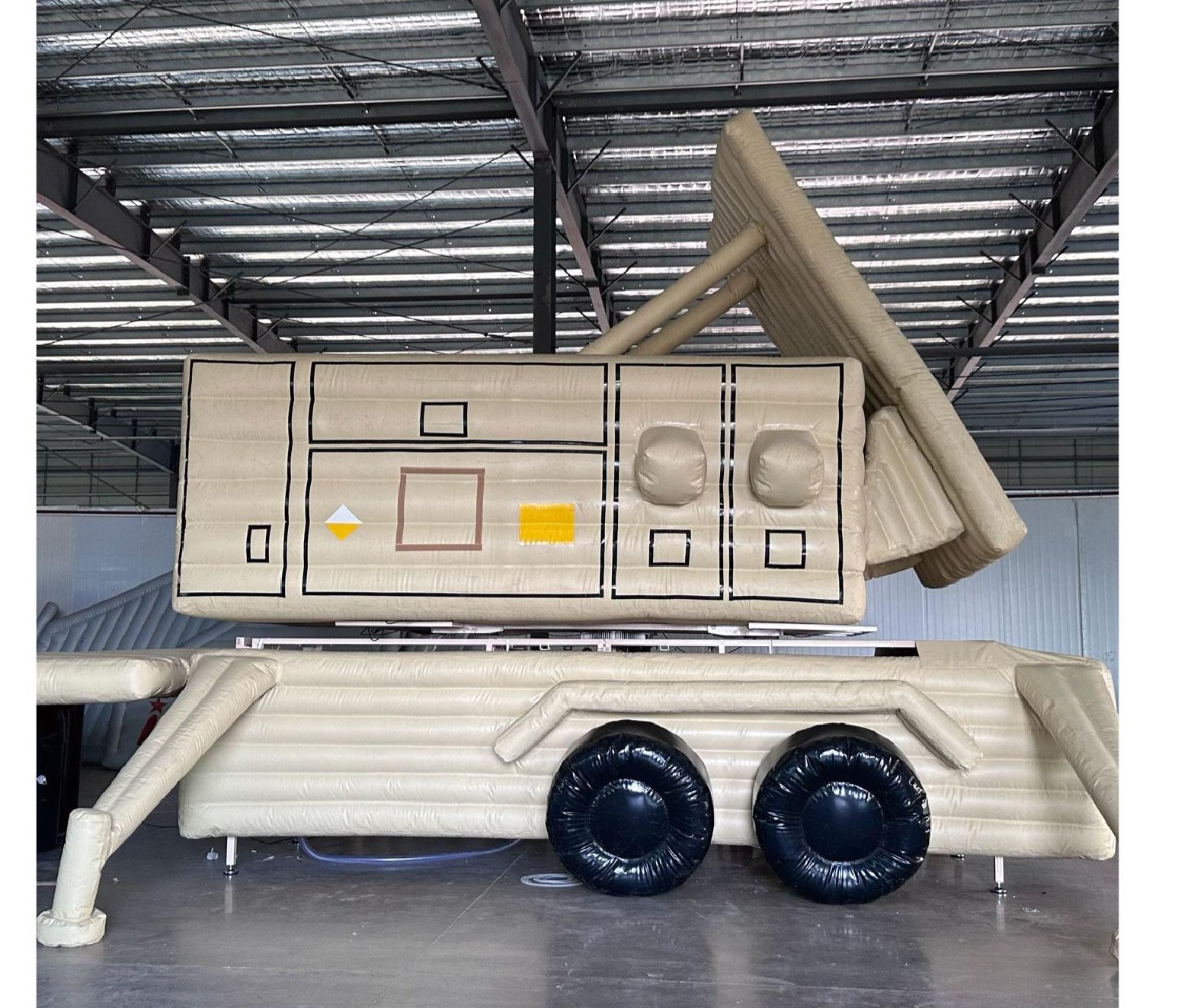
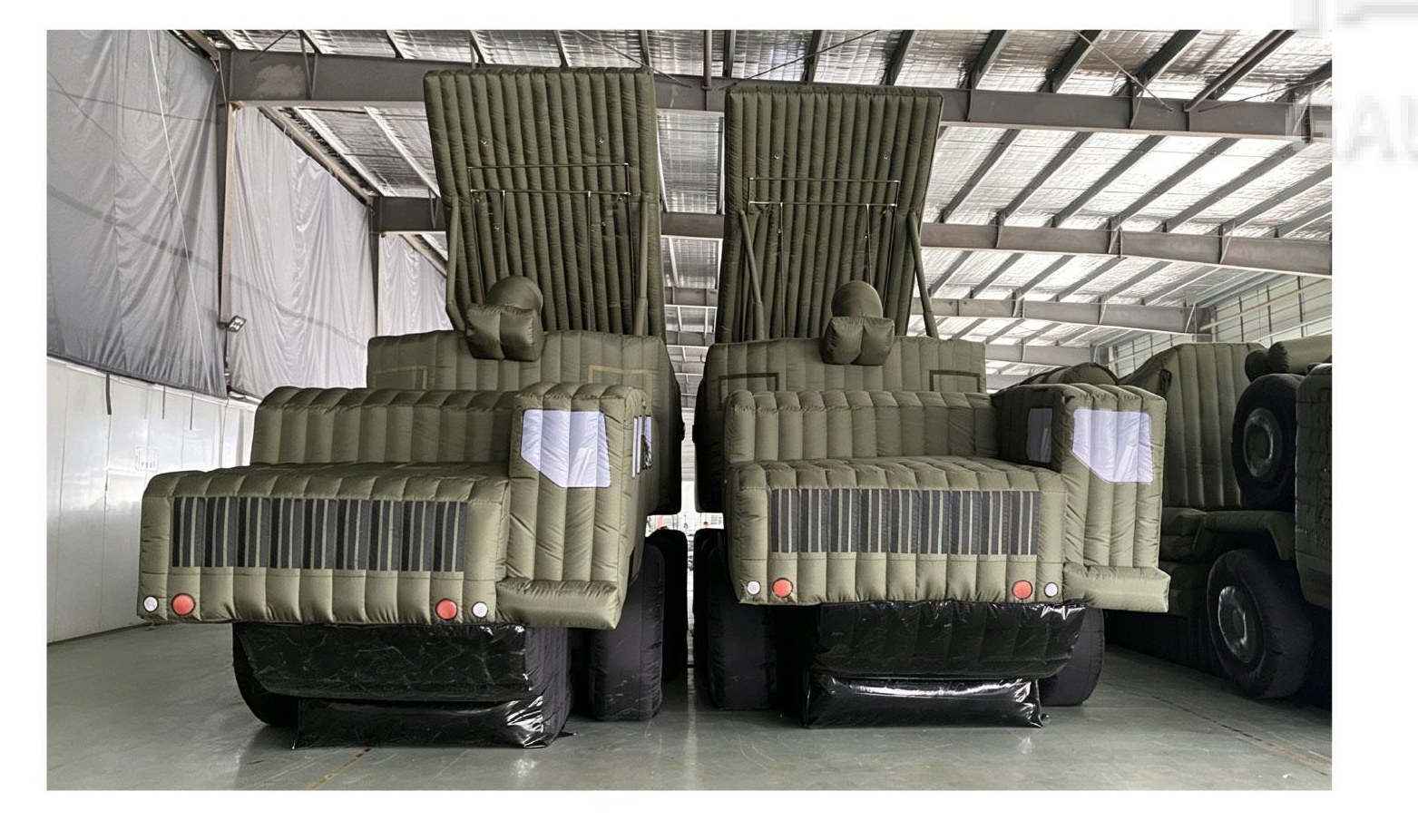
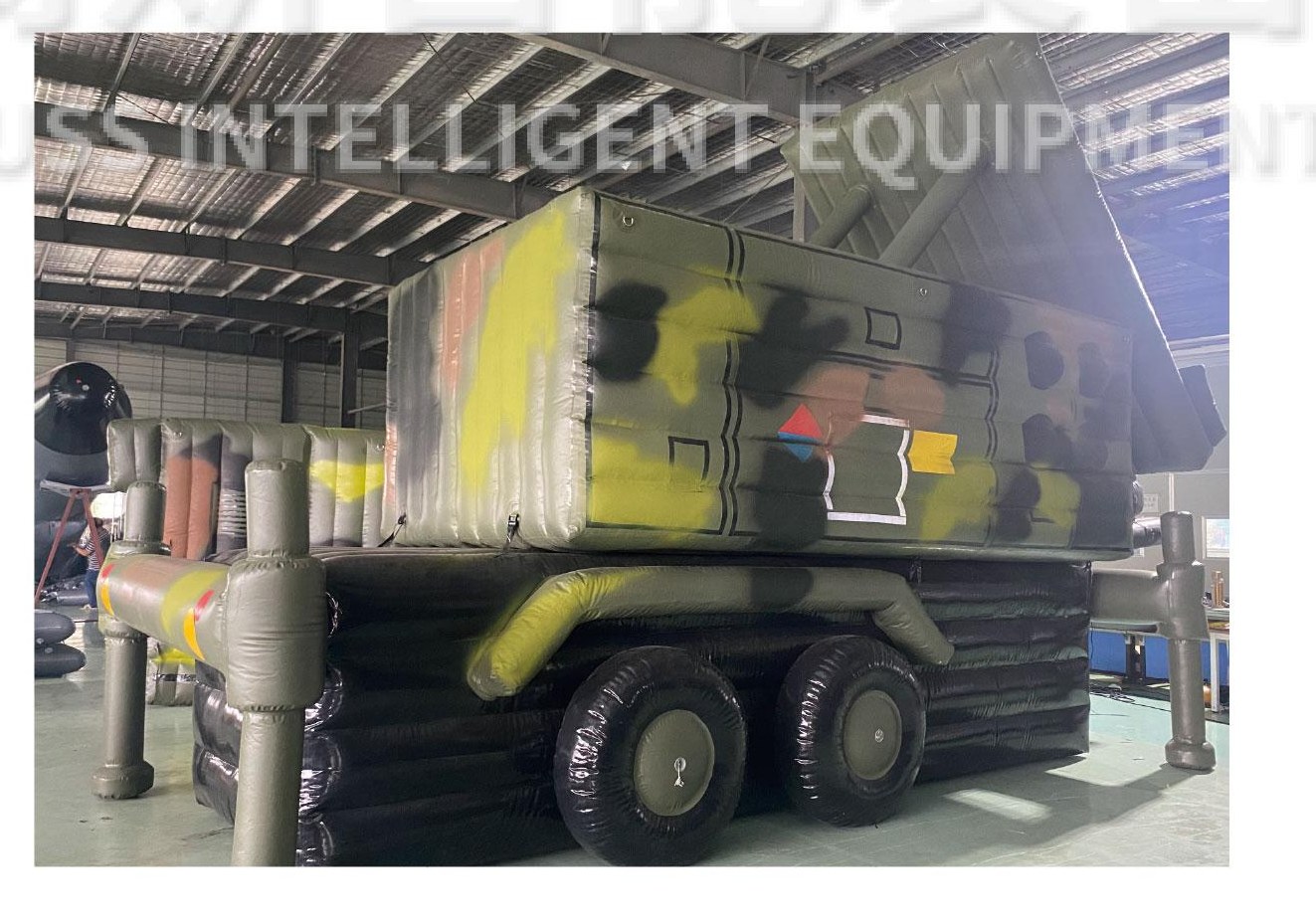
- Patriot-class and road-mobile launcher decoys, including the raised canister pack
- Command post and support vehicle decoys that give the site its normal vehicle park
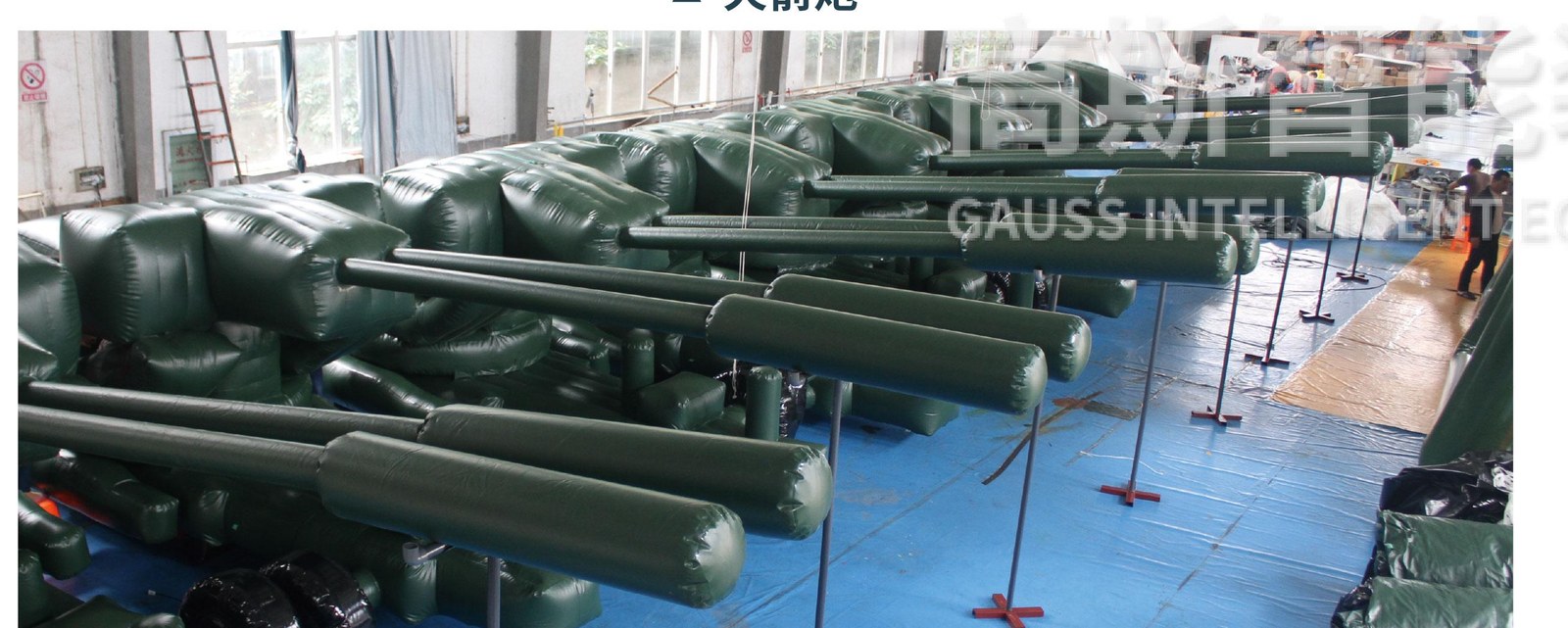
- Anti-aircraft gun batteries laid out as a full gun line
Signatures that keep working after the image is taken
A decoy that only looks right in a photograph is good for one pass. These keep emitting: the antenna array rotates and elevates on a 2 km remote control, an infrared heat source gives the position a thermal image, and smoke and acoustic modules can be added to keep it convincing at closer range.
The whole vehicle is the reflector
Radar return is not left to the antenna alone. Hulls are inflated from metallic and composite fabrics, with a corner reflector set fitted to the cross-section being reproduced — a strong, uniform return across the vehicle at 1–20 GHz, radar reflectivity of 95% or better, and wave transmittance below 1%.
From transit bag to position
A single radar or launcher decoy inflates in about three minutes and is on station in 8–15 minutes with a crew of three. A complete air-defence position — radar vehicles, launchers, command and support vehicles — takes 30–60 minutes with six to eight operators. The same set deploys, recovers and redeploys, and is repairable in the field from the supplied patch kit.
The aim is not to hide the real position. It is to make the decoy the one that gets attacked.
01
Featured equipment
03
Related reading
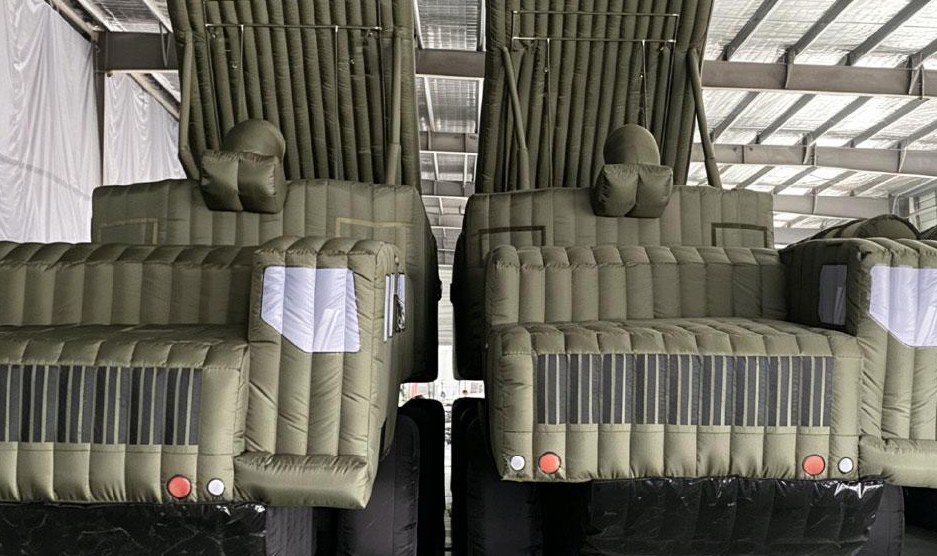
Radar decoys: frequency range, reflectivity and what really matters
A radar decoy is judged by what it returns, not by how it looks. This note explains the three figures worth asking for in a tender, and why a single "reflectivity" number is never enough.
Read article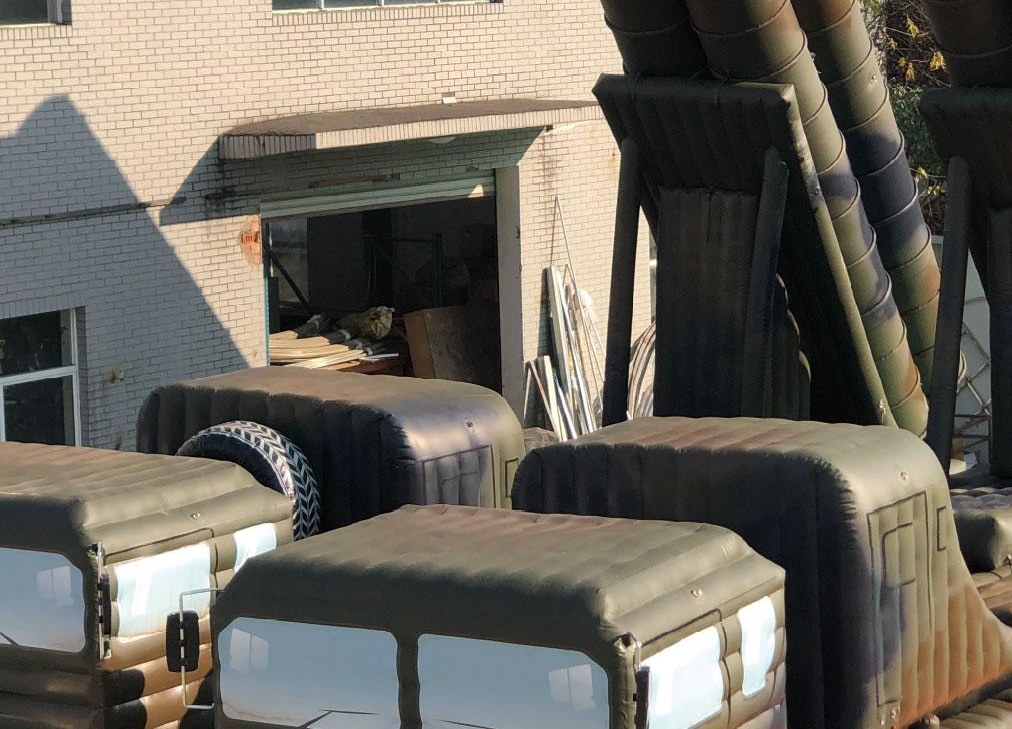
How inflatable decoys defeat modern reconnaissance
Reconnaissance now fuses radar, infrared and optical imagery within minutes. A decoy only works if it survives all three at once — here is how a modern inflatable target is engineered to do that.
Read articleSend us your platform list
Tell us which vehicles, aircraft or radar sets you need to protect and we will return a configuration, a lead time and an export quotation.