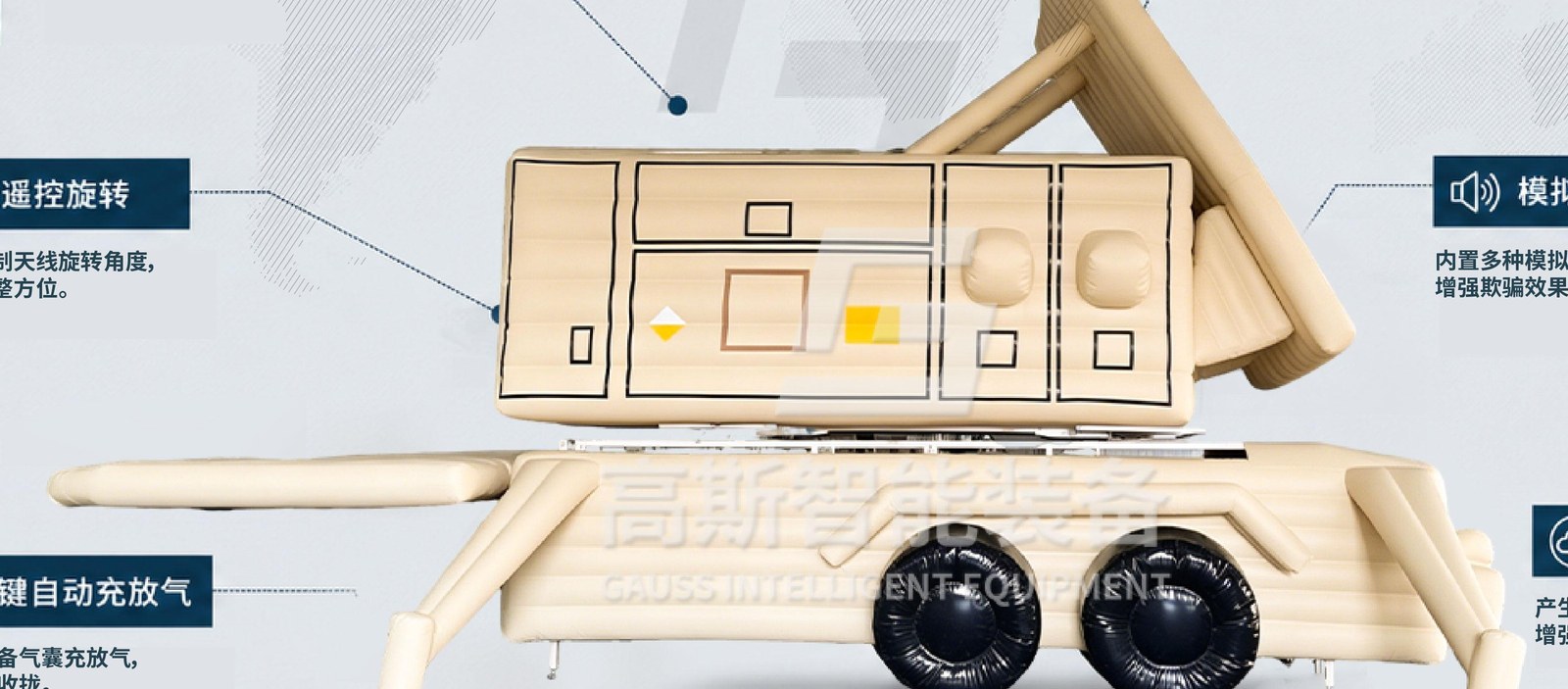
Patriot radar decoy — motorised antenna
Patriot-class radar vehicle decoy with motorised antenna elevation and rotation, infrared and acoustic simulation, and optional smoke modules.
Patriot-class radar vehicle decoy with motorised antenna elevation and rotation, infrared and acoustic simulation, and optional smoke modules.
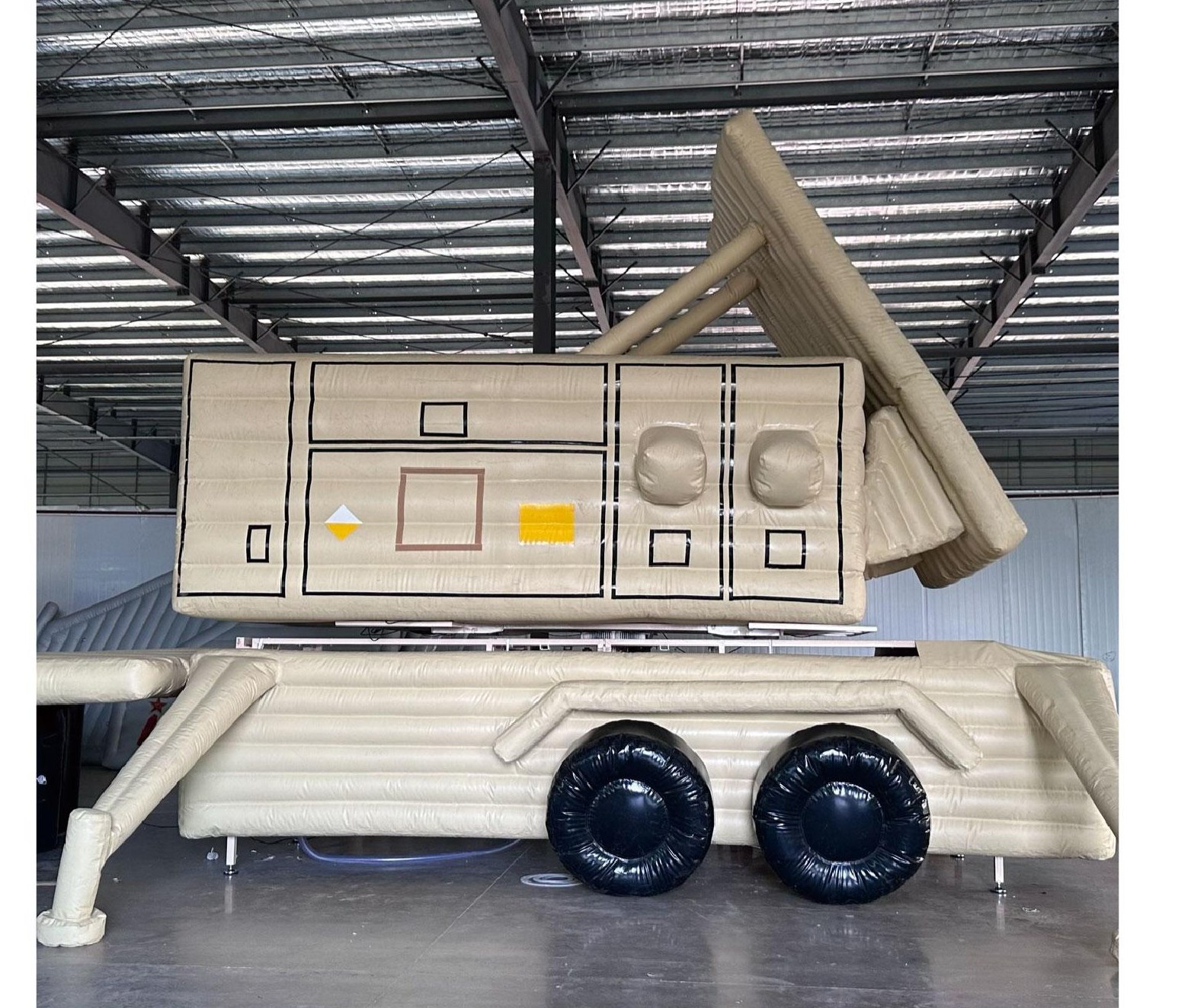
Inflatable Patriot-3 radar vehicle with an erectable, rotatable antenna array and an integrated infrared heat source for thermal realism.
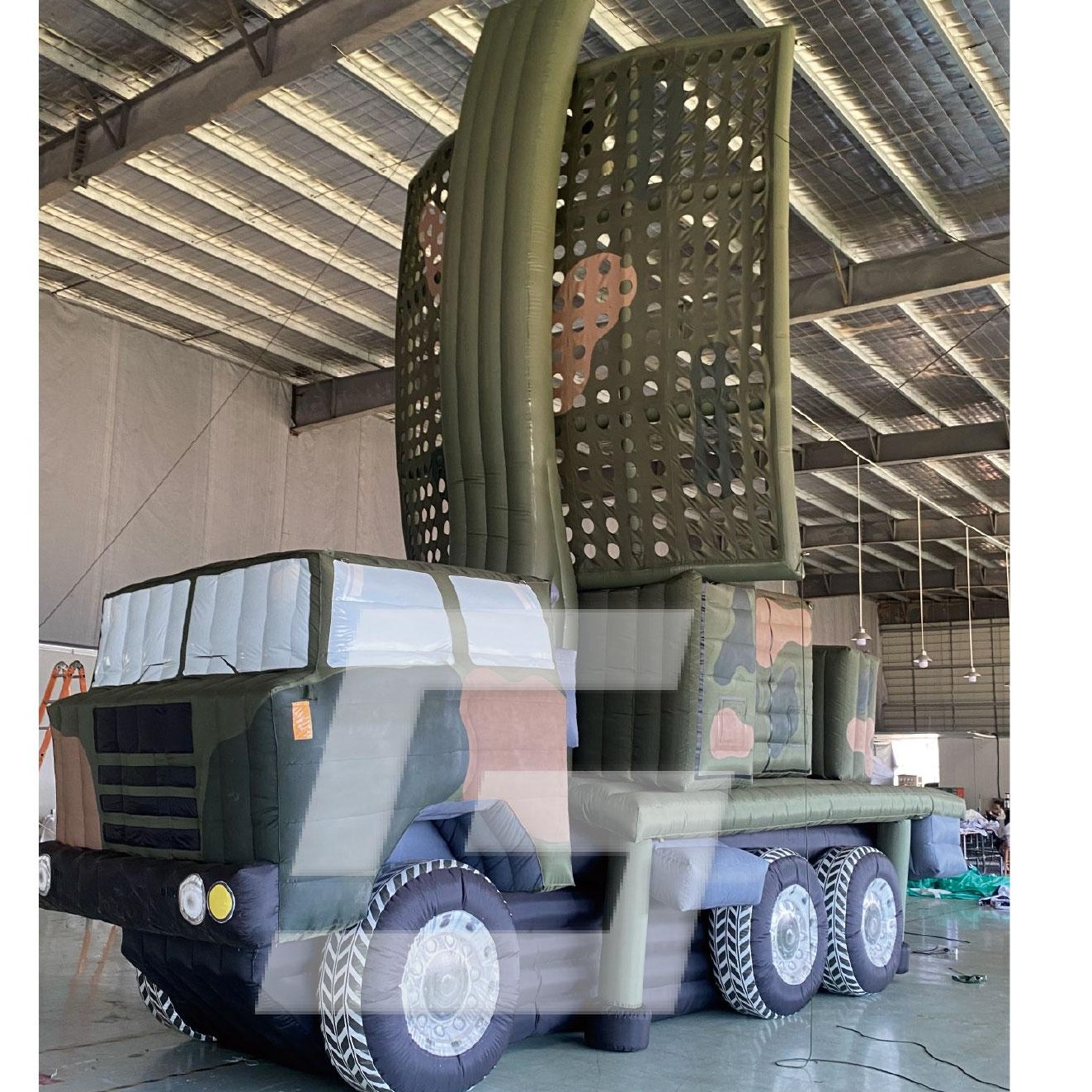
Full-scale radar vehicle with a large vertical antenna array, built to reproduce the radar cross-section of a working acquisition radar.
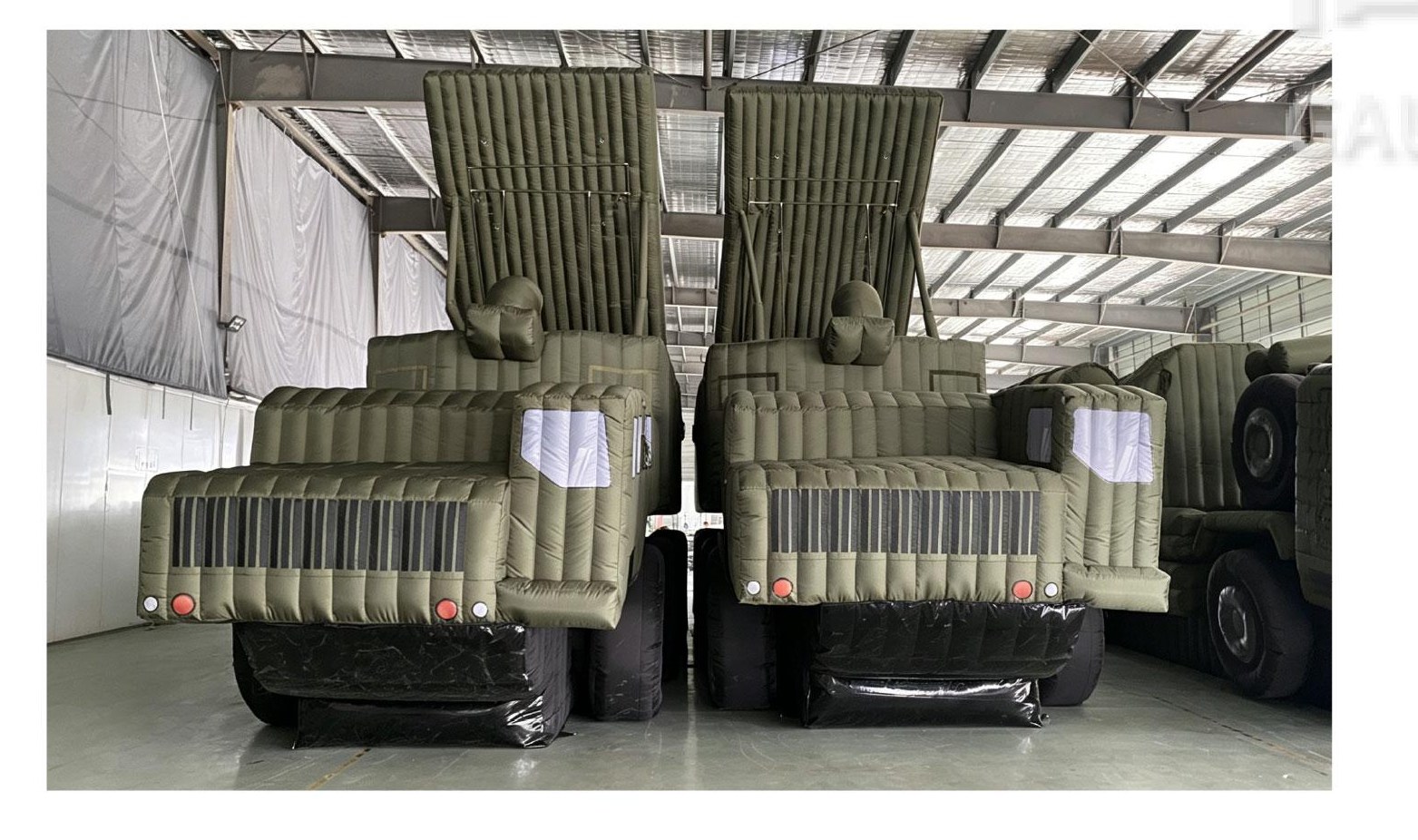
A radar decoy whose entire body is clad in metallic fabric, giving a strong and uniform radar return across the whole vehicle rather than at the antenna alone.
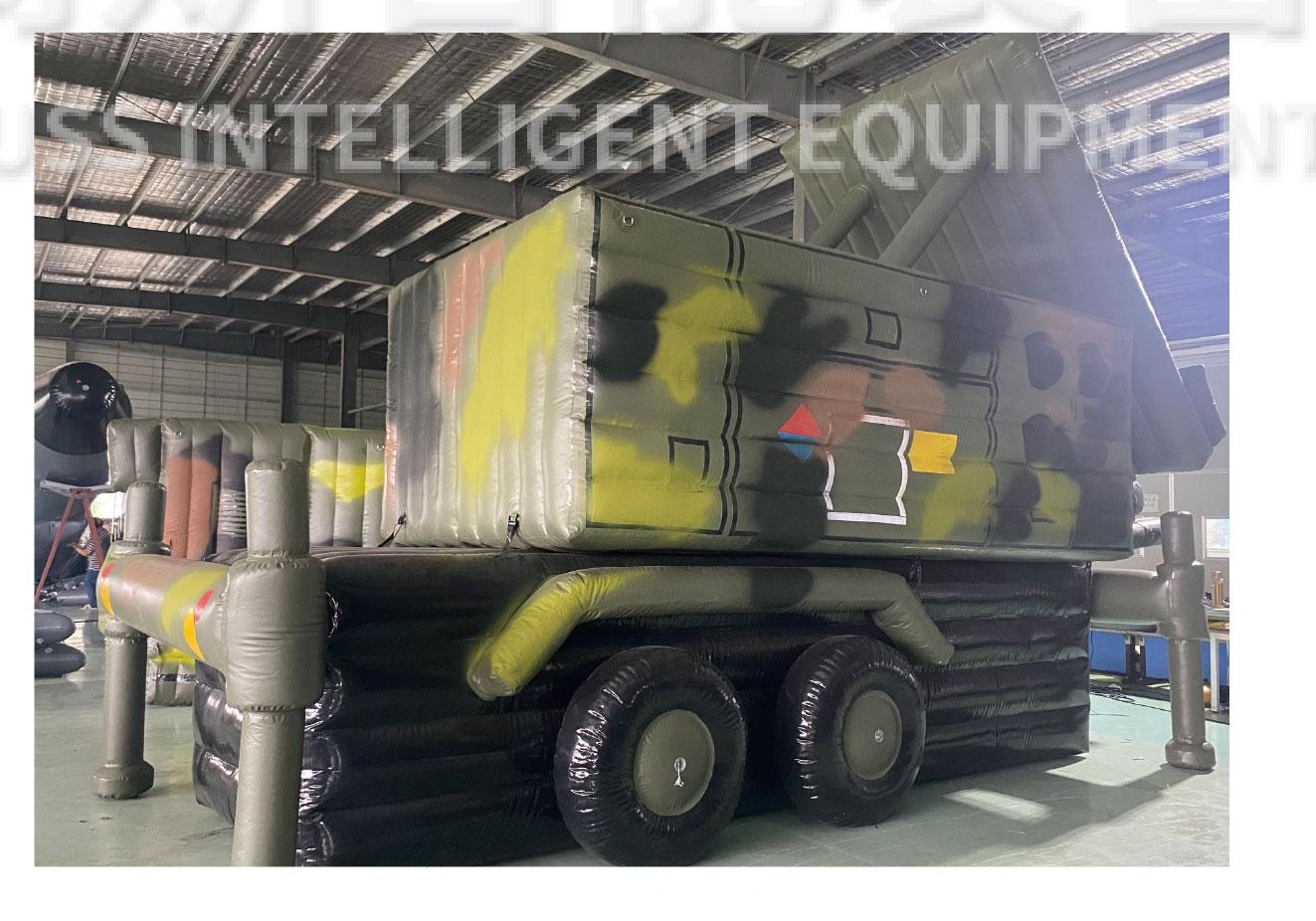
Road-mobile radar decoy with a folding antenna array: packed flat for repeated moves between decoy positions and raised again in under fifteen minutes.
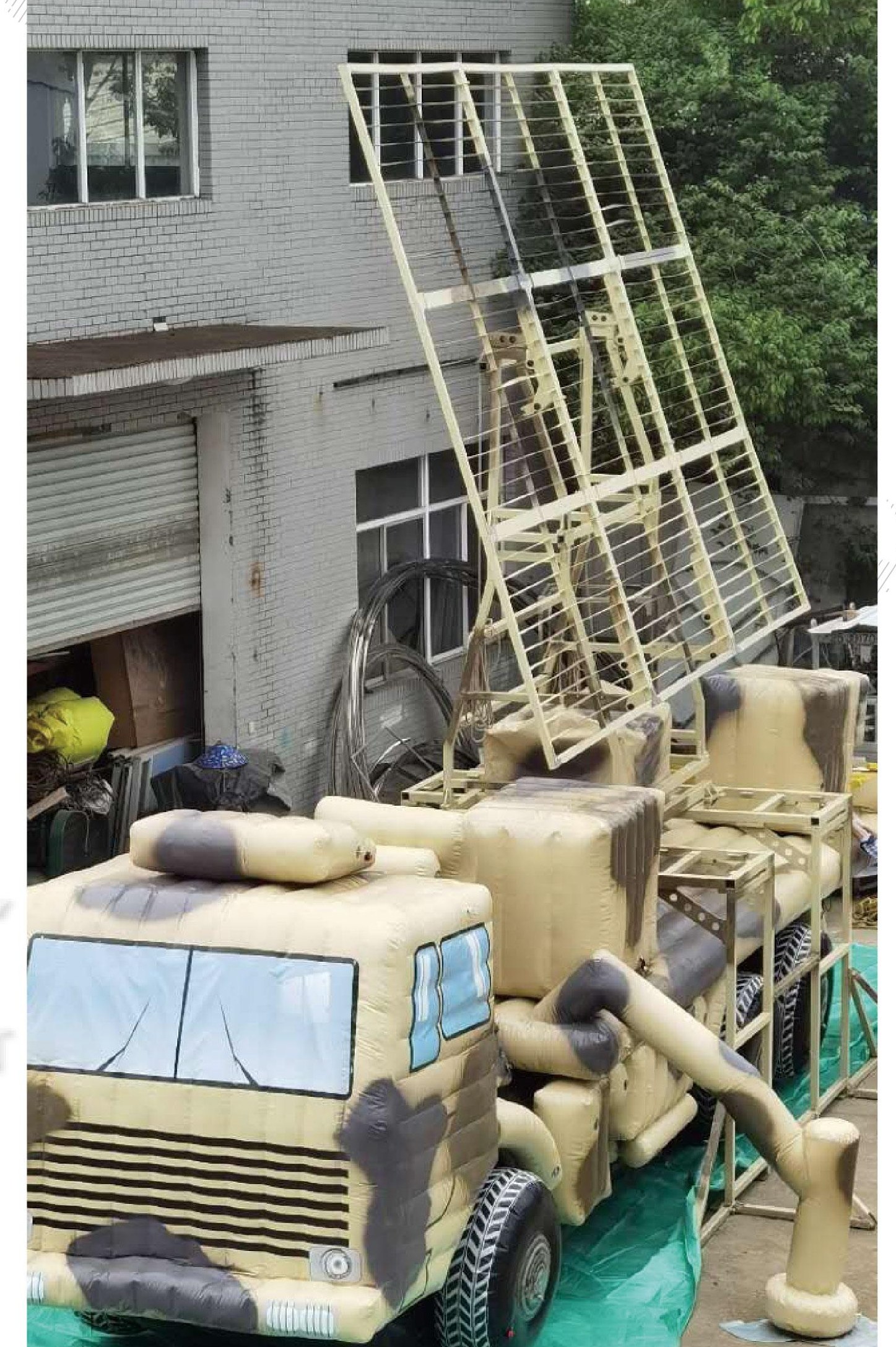
Rotating search radar decoy whose motorised array sweeps the horizon by remote control, so the position still reads as live after the first reconnaissance pass.
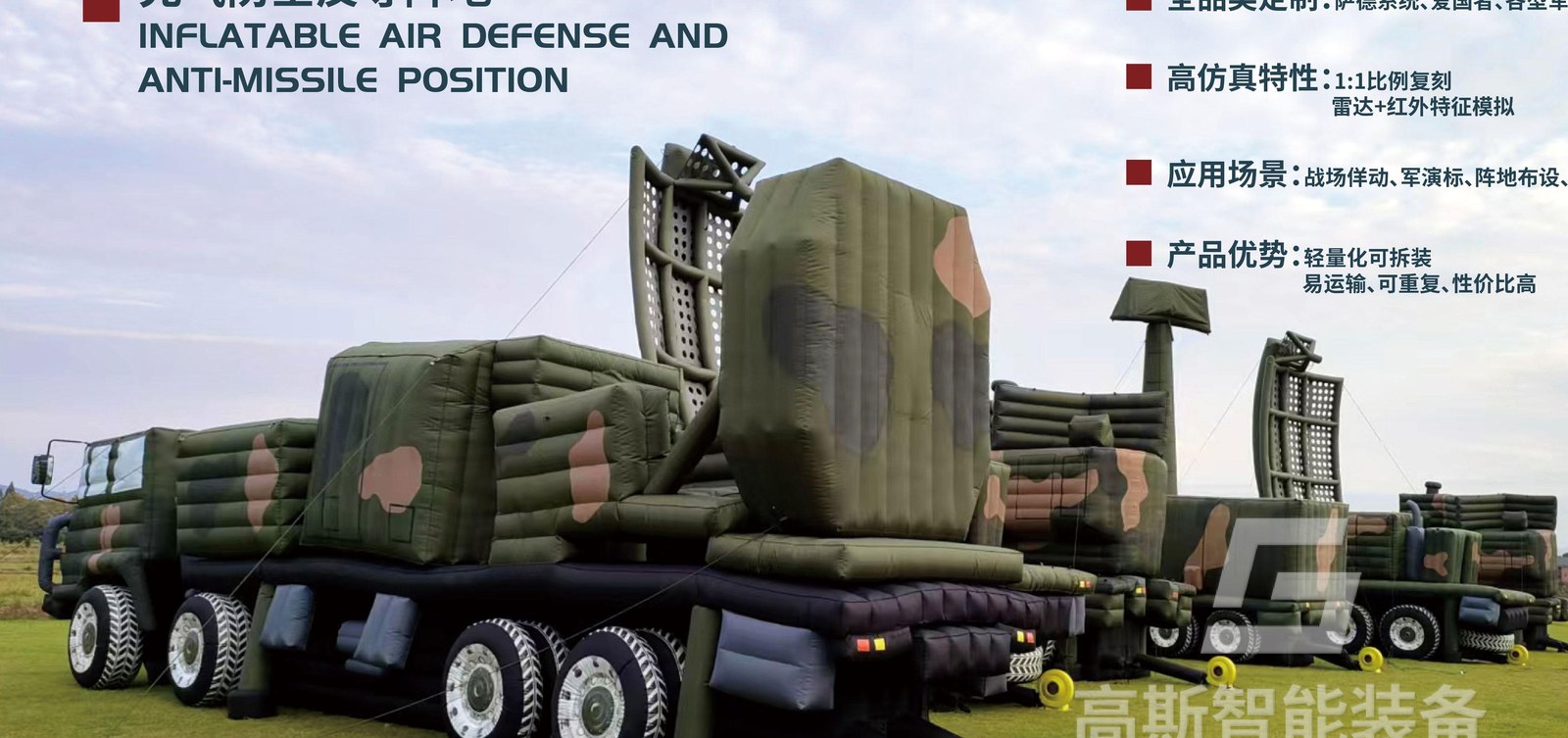
A complete decoy position combining radar vehicles, launchers, command vehicles and support vehicles into one convincing air-defence site.
Other categories
Overview
Radar decoys combine a structural fabric envelope with a nano metallic coating tuned to the frequency bands of the emitters they must defeat. Trailer and shelter bodies reproduce the panel lines, louvres and antenna positions of the original, and rotating arrays are driven by low-power electric actuators so the decoy keeps producing movement after deployment.
Yes. Corner reflectors and metal fabric in the skin give an adjustable radar cross-section from 0.1 to 50 m², so the decoy can be tuned to the radar type it is standing in for rather than presenting a generic return.
The thermal signature is reproduced to within ±20 °C of the target profile, which is close enough for imaging infrared sensors and for thermal target identification at operational ranges.
Yes. The remote-control option rotates the antenna a full 360°, with adjustable rotation speed and reflection intensity, driven from up to 2 km away. A stationary antenna is also available where the scenario does not call for movement.
About 3 minutes for inflation by a two-person team, which makes it practical to move a decoy position between observation windows.
The continuous-inflation version holds pressure indefinitely from a low-power supply, so the position reads as continuously occupied for weeks rather than sagging between top-ups.
Optical observation, imaging infrared and radar. The skin is a radar-reflective metal fabric, the thermal layer is adjustable, and the outer finish is a PU-coated camouflage that holds its colour in ultraviolet light.
Yes. Radar, launcher and support vehicles can be supplied as a matched set with a common signature specification, so an entire battery reads as a single coherent position.
01
Pick ground with the same horizon and clutter as a real radar site, and confirm the radar cross-section to be reproduced.
02
Assemble the corner reflectors to the agreed cross-section before the hull is inflated.
03
Run the blower to working pressure — about 3 minutes.
04
Erect the antenna and set the search azimuth to match the position being simulated.
05
Pair the control unit and confirm rotation speed and reflection intensity from the operator position.
06
Observe the position from the likely sensor direction and adjust orientation or reflectors if the return needs trimming.
07
Deflate, fold, and store the reflectors separately so the set stays matched.
| Minimum order | From 1 set — mixed models can share one container |
| Sample lead time | 72 hours for stock patterns |
| Documentation | Bid documents, test reports and certificate of origin |
| Customisation | Camouflage, unit markings, insignia and signature options |
| Service life | Over 200 inflation cycles in field conditions |
| Lead time & payment | Lead time and payment terms confirmed on enquiry |
Swipe to see more →
Tell us the platforms you need to simulate and we will confirm specification, lead time and payment terms in writing.
Send the platform type, the signature you need and the delivery country — any platform, from any origin. You get back a written specification, a lead time and an export quotation.
Request a quotation
Tell us what you need to protect and we will come back with a configuration and an export quotation.
Thank you — your enquiry has been prepared. We reply within one working day.