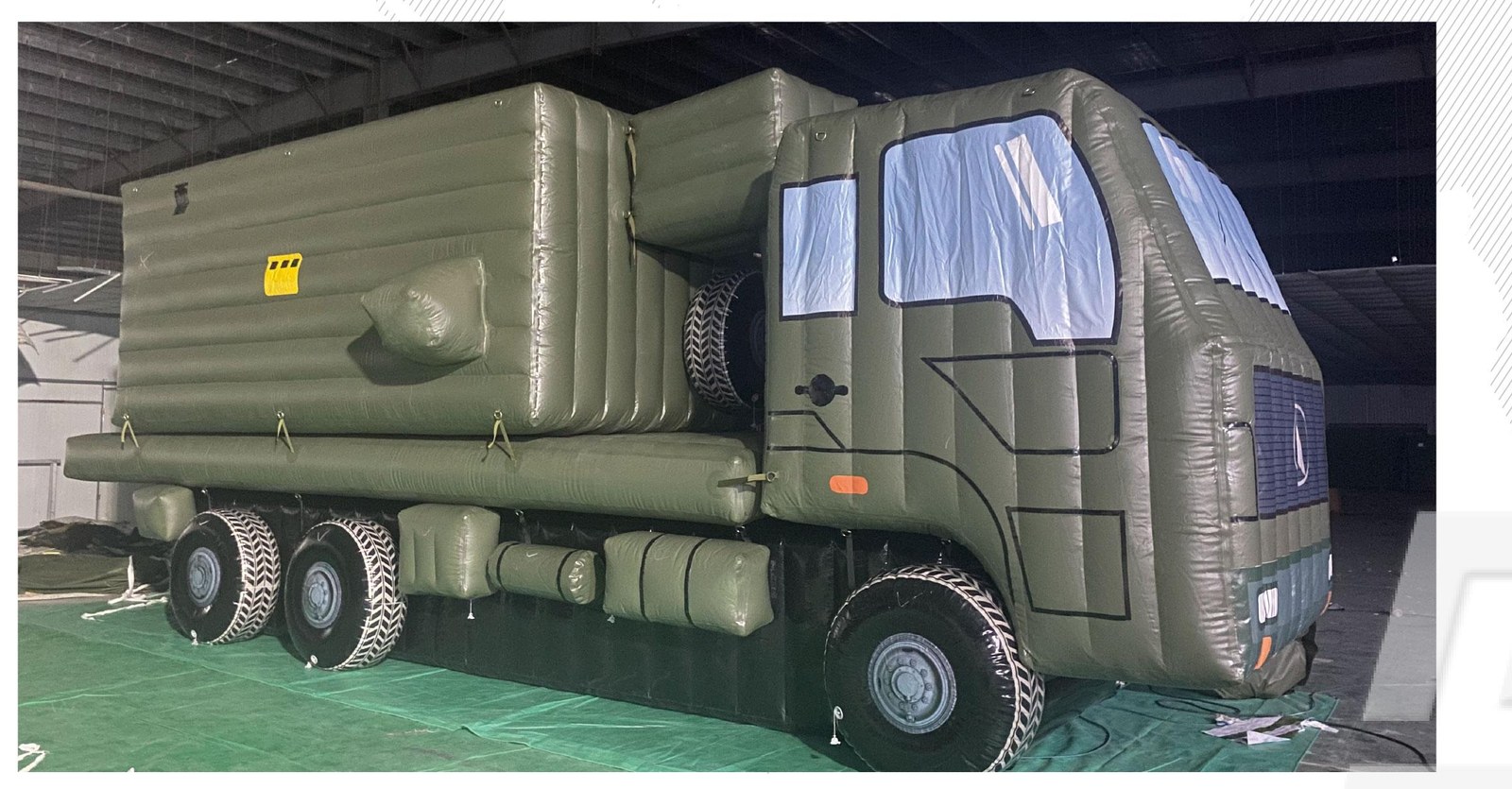
Command post vehicle decoy
Inflatable command vehicle with a box body, windows and antenna bases, used to make a headquarters layout look occupied.
Inflatable command vehicle with a box body, windows and antenna bases, used to make a headquarters layout look occupied.
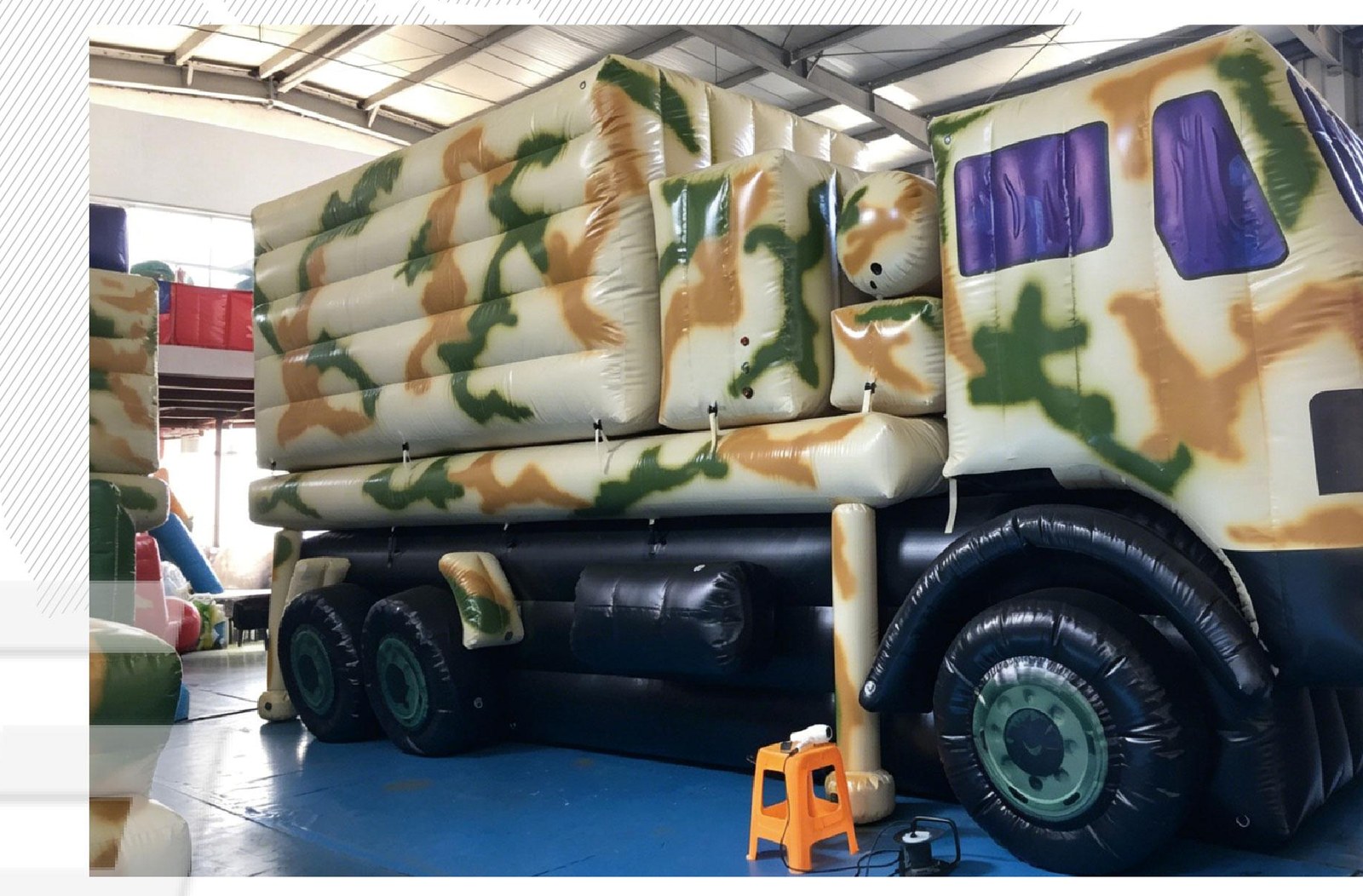
Inflatable shelter truck with a detailed camo body, dark glazing and running gear, matching the shelter vehicles in most support units.
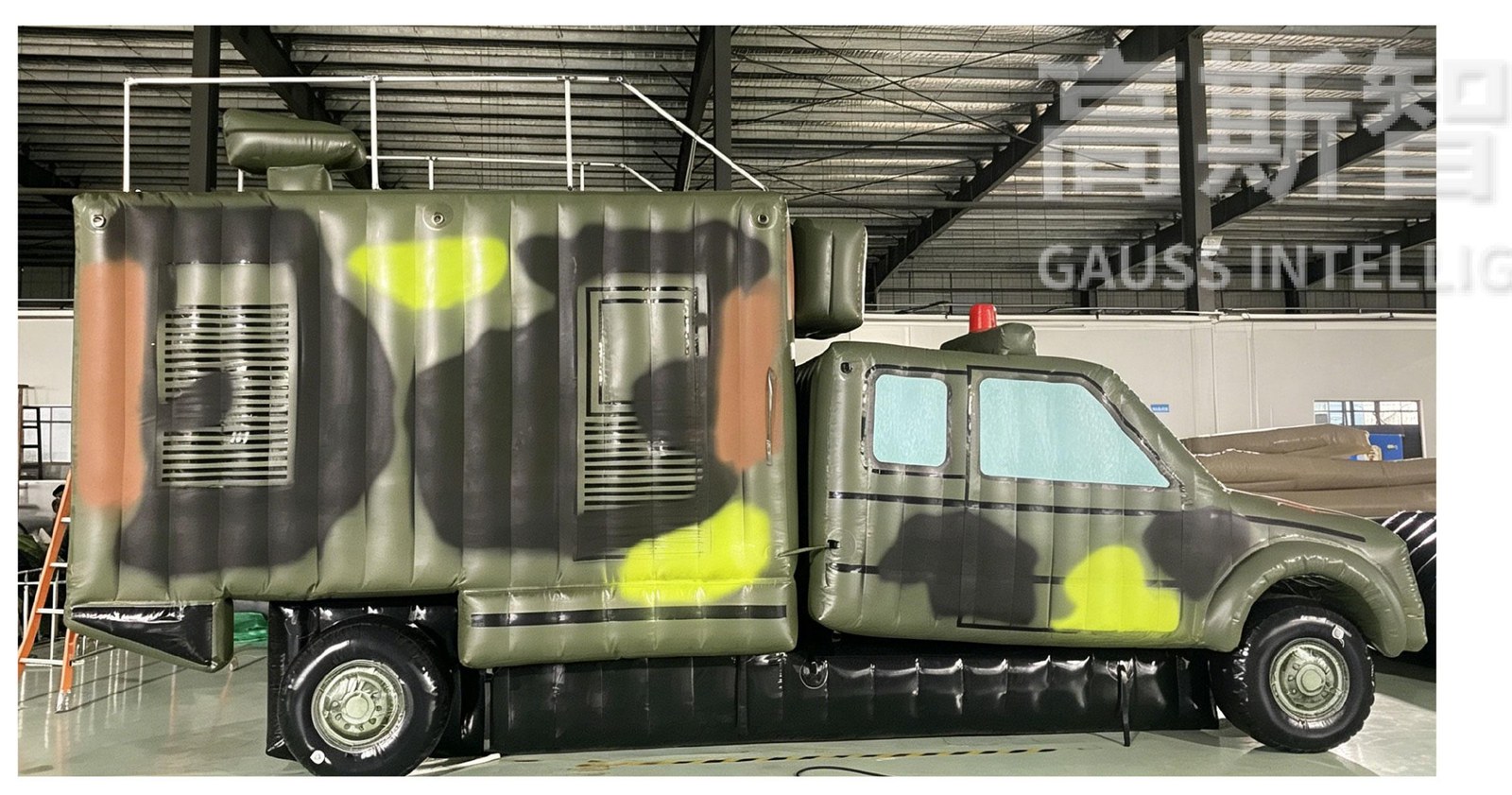
Jammer vehicle decoy with antenna and equipment-rack detail, used to draw anti-radiation weapons away from real EW platforms.
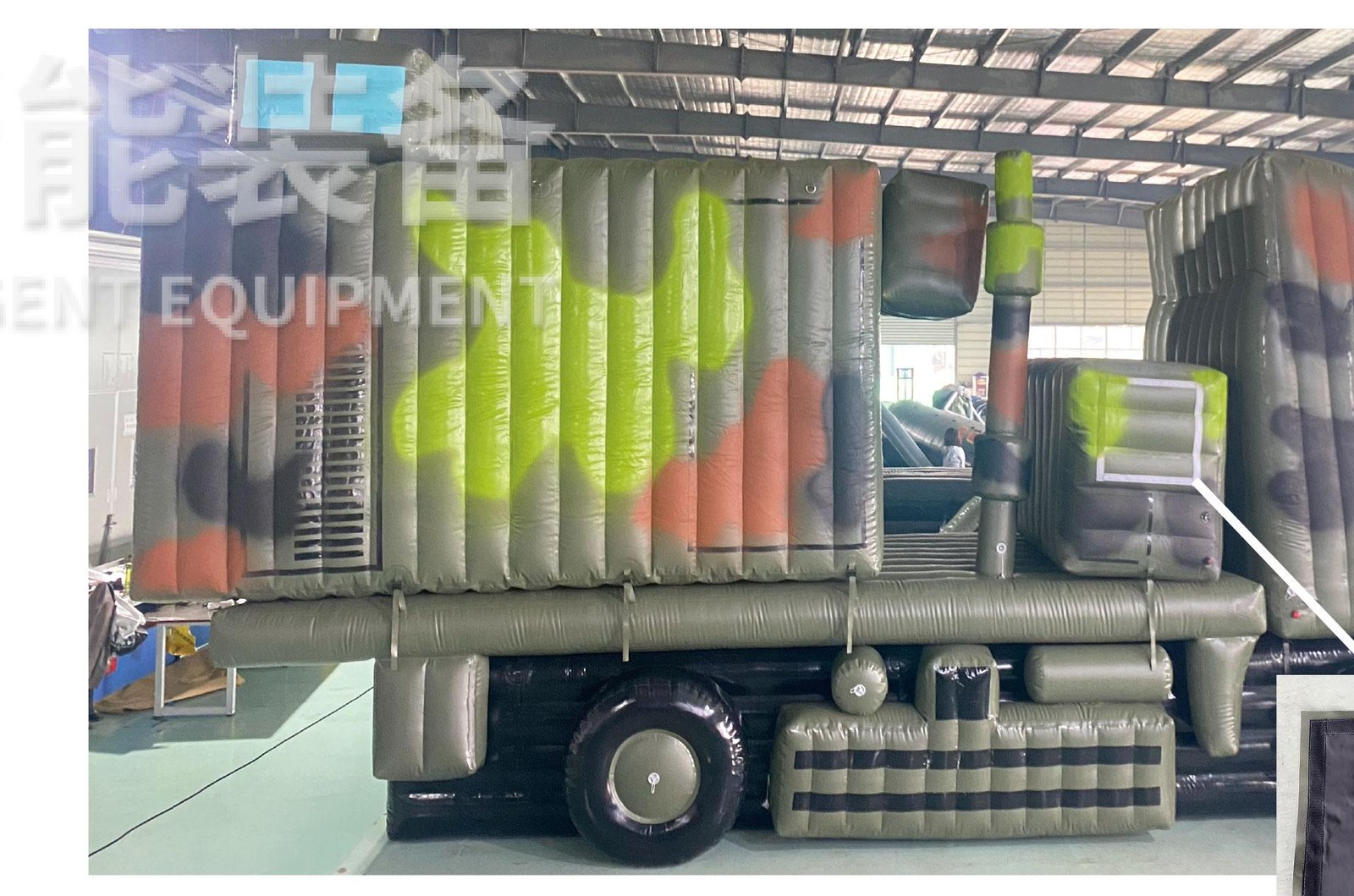
Satcom vehicle decoy with a dish and equipment shelter, reproducing the antenna geometry that makes a communications node recognisable.
Other categories
Overview
Command, jammer and SATCOM vehicle decoys cover the support fleet that makes a position look occupied — command posts, shelter trucks, jammers and satellite communications vehicles. Each body is built over a collapsing frame, so it arrives in a transit bag and stands to full shape in minutes without a crane or a working party.
Command posts, shelter and communications vehicles, satellite communications and antenna vehicles, jamming platforms, transport, medical and recovery vehicles, and radar trucks. Each is reproduced 1:1 from the platform, including shelters, masts and roof equipment.
Yes, on request. Antenna and shelter configurations are reproduced together with an adjustable radar cross-section from 0.1 to 50 m² and an infrared layer, so the vehicle reads as an emitter site rather than an empty hull.
Because these are the vehicles that reconnaissance is looking for. A convincing command post or communications node draws collection effort and targeting away from the real headquarters.
Typically 5 to 10 minutes depending on the size of the shelter and whether masts have to be erected. A two-person team is sufficient for the standard range.
Yes. Vehicles can be ordered as a set — command post, communications node, radar truck and support vehicles — with a consistent signature specification so the layout reads correctly as a group.
Yes. Masts and antenna assemblies can be supplied erectable, and the remote-control option switches signature and movement from up to 2 km away.
The skin is a high-strength PVC composite with a UV-stable PU coating, rated for more than 200 inflation cycles and repairable in the field.
01
Set out where each vehicle sits and which way masts and antennas should point, so the group matches the real layout.
02
Unroll each hull on its outline and inflate to working pressure — 5 to 10 minutes per vehicle.
03
Raise the masts and antenna assemblies and secure the guys.
04
Drive the anchors and tension the lines so the vehicles hold their attitude in wind.
05
Install the radar reflector, heat source or remote-control package if an active signature is required.
06
Observe the group from the likely collection axis and adjust spacing or orientation as needed.
07
Lower masts, deflate, fold and stow in sequence.
| Minimum order | From 1 set — mixed models can share one container |
| Sample lead time | 72 hours for stock patterns |
| Documentation | Bid documents, test reports and certificate of origin |
| Customisation | Camouflage, unit markings, insignia and signature options |
| Service life | Over 200 inflation cycles in field conditions |
| Lead time & payment | Lead time and payment terms confirmed on enquiry |
Swipe to see more →
Tell us the platforms you need to simulate and we will confirm specification, lead time and payment terms in writing.
Send the platform type, the signature you need and the delivery country — any platform, from any origin. You get back a written specification, a lead time and an export quotation.
Request a quotation
Tell us what you need to protect and we will come back with a configuration and an export quotation.
Thank you — your enquiry has been prepared. We reply within one working day.