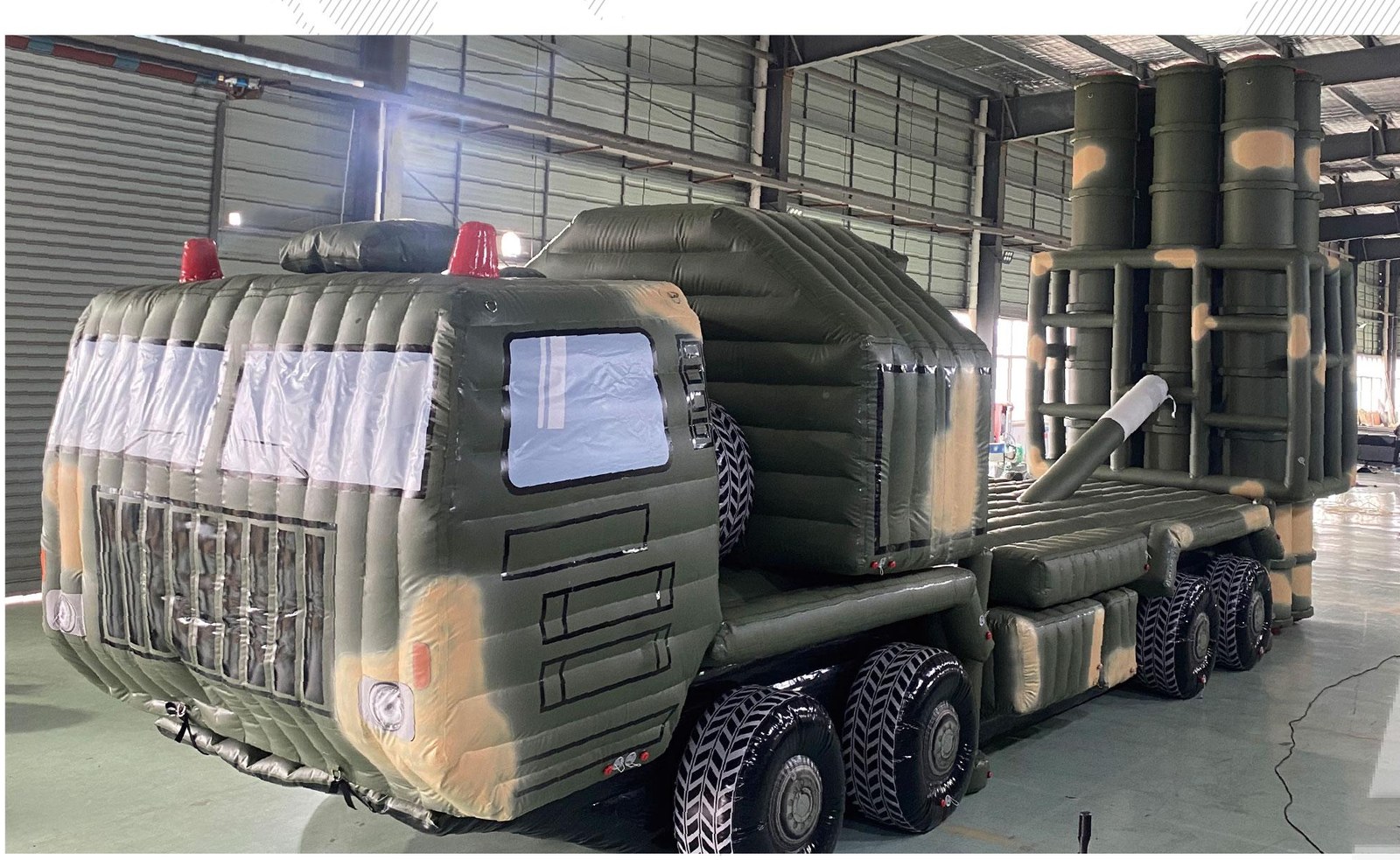
Road-mobile TEL decoy — canister launcher
Transporter-erector decoy with a detailed cab, launch tubes and chassis, reproducing the silhouette of a road-mobile launcher.
Transporter-erector decoy with a detailed cab, launch tubes and chassis, reproducing the silhouette of a road-mobile launcher.
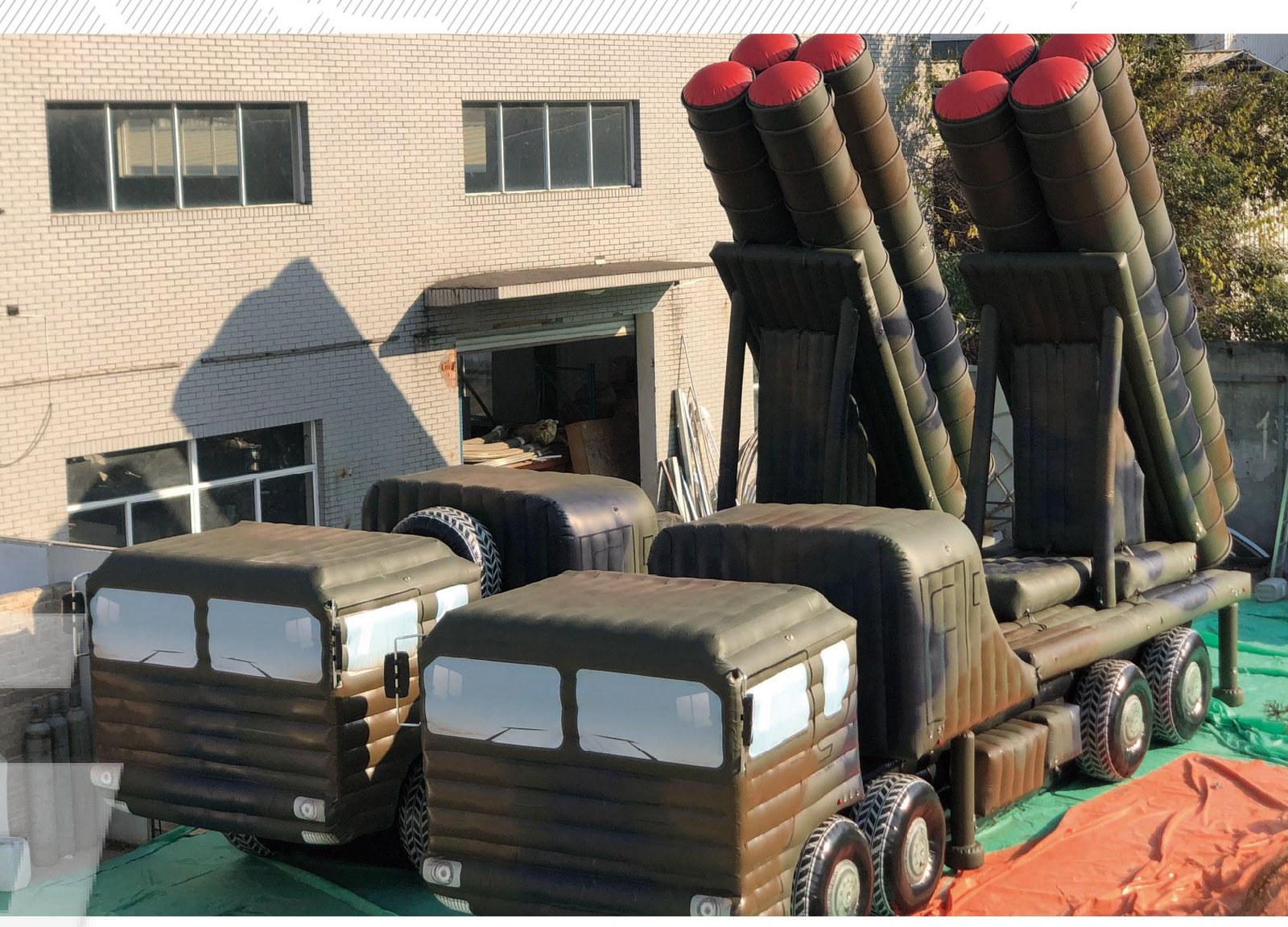
Surface-to-air launcher decoy shown in the firing position, with canisters raised and red nose caps that read correctly from the air and from the ground.
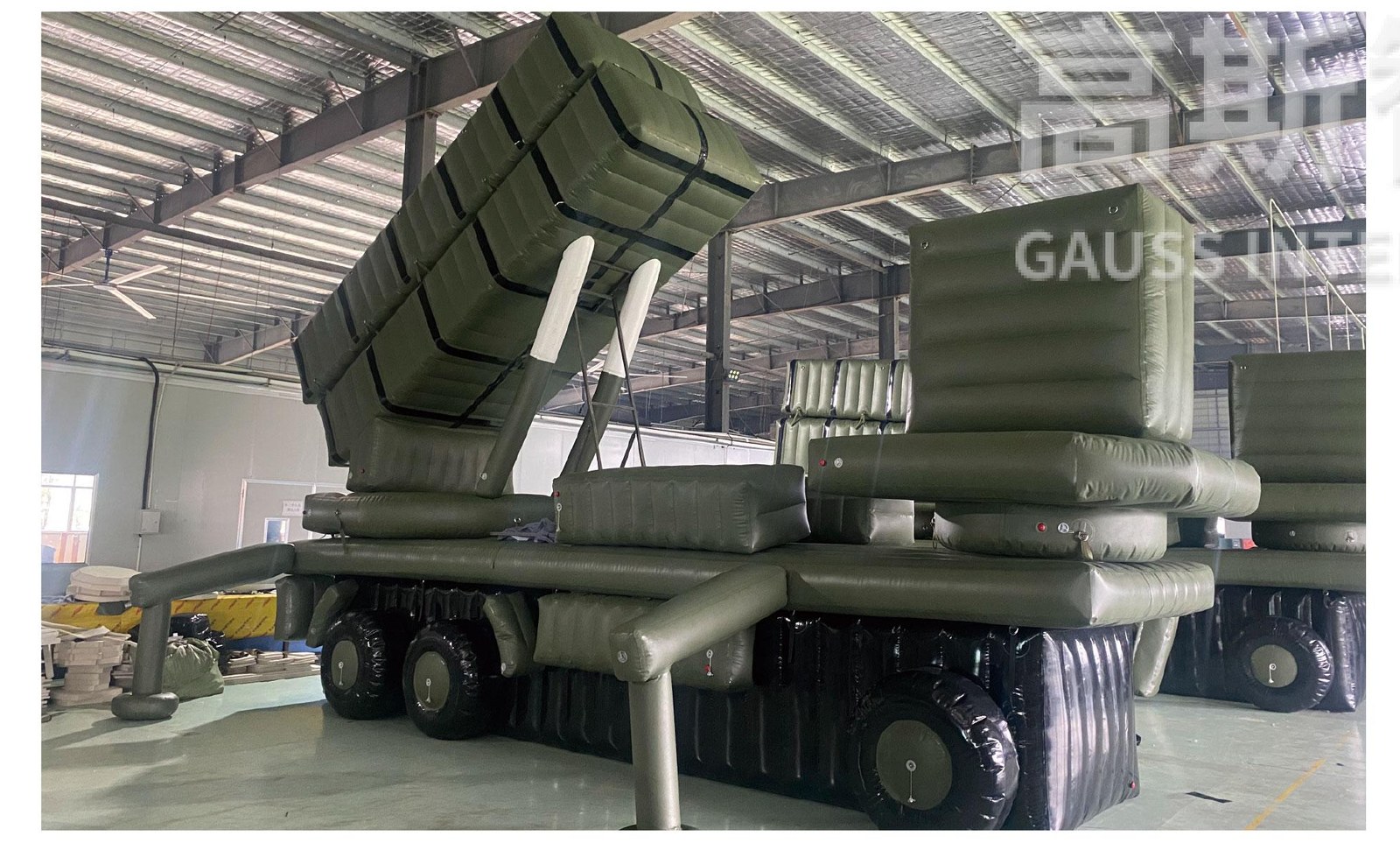
Trailer-mounted launcher decoy in a 4-canister configuration, matching the Patriot launcher silhouette including the raised canister pack.
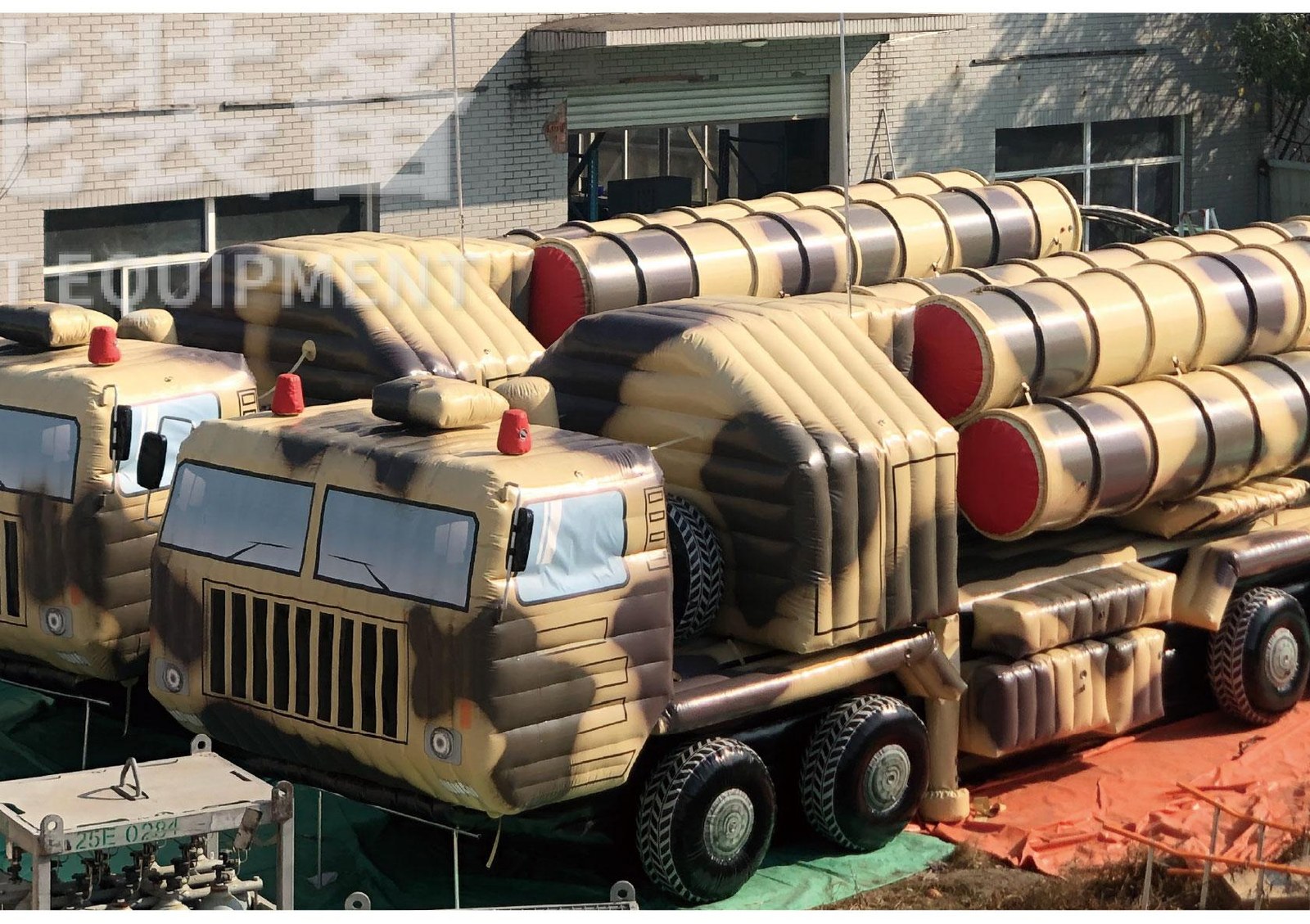
Long-canister launcher decoy on a multi-axle chassis, reproducing the proportions of a heavy transporter-erector launcher.
Other categories
Overview
Missile launcher decoys reproduce both the transporter-erector vehicle and its loaded canisters, including tube spacing, elevation angle and camouflage pattern. Canister packs are supplied as separate units so that a single vehicle decoy can be reconfigured for a different missile type, and motorised elevation is available where a position has to be shown moving.
Transporter-erector launchers, air-defence launchers and their associated radar and support vehicles. Proportions, launcher elevation and vehicle layout are taken 1:1 from the platform, and a complete battery can be supplied as one scenario.
3 to 5 minutes for a two-person team on a standard launcher vehicle, including erection of the launcher arm.
The frame is built from a thickened alloy structure that carries the shape without a continuous air supply, and the assembly is rated for Beaufort 8 with the supplied anchors.
The launcher fabric is a three-protection (NBC) rated material, so the decoy can be used in the same environments the real equipment is prepared for.
Yes. The metallic skin gives an adjustable radar cross-section and the thermal layer reproduces the infrared signature. Both are specified per launcher type.
Bid documents, test reports and a certificate of origin are supplied as a standard package, and samples for stock patterns are dispatched within 72 hours.
Yes. Launchers, radar and support vehicles can be ordered as a matched set so the whole position reads coherently rather than as a single vehicle on empty ground.
01
Match the ground and orientation the real launcher site would use, including access tracks and support vehicle spacing.
02
Unroll the hull and assemble the alloy frame on the marked outline.
03
Inflate to working pressure — 3 to 5 minutes for a two-person team.
04
Raise the launcher to the elevation the scenario calls for and lock it in place.
05
Tension the guy lines and set the anchors to the Beaufort 8 rating before leaving the position.
06
Install the radar reflector panel or heat source if the exercise requires an active signature.
07
Lower the launcher arm, deflate in sequence, and stow the frame and hull separately.
| Minimum order | From 1 set — mixed models can share one container |
| Sample lead time | 72 hours for stock patterns |
| Documentation | Bid documents, test reports and certificate of origin |
| Customisation | Camouflage, unit markings, insignia and signature options |
| Service life | Over 200 inflation cycles in field conditions |
| Lead time & payment | Lead time and payment terms confirmed on enquiry |
Swipe to see more →
Tell us the platforms you need to simulate and we will confirm specification, lead time and payment terms in writing.
Send the platform type, the signature you need and the delivery country — any platform, from any origin. You get back a written specification, a lead time and an export quotation.
Request a quotation
Tell us what you need to protect and we will come back with a configuration and an export quotation.
Thank you — your enquiry has been prepared. We reply within one working day.