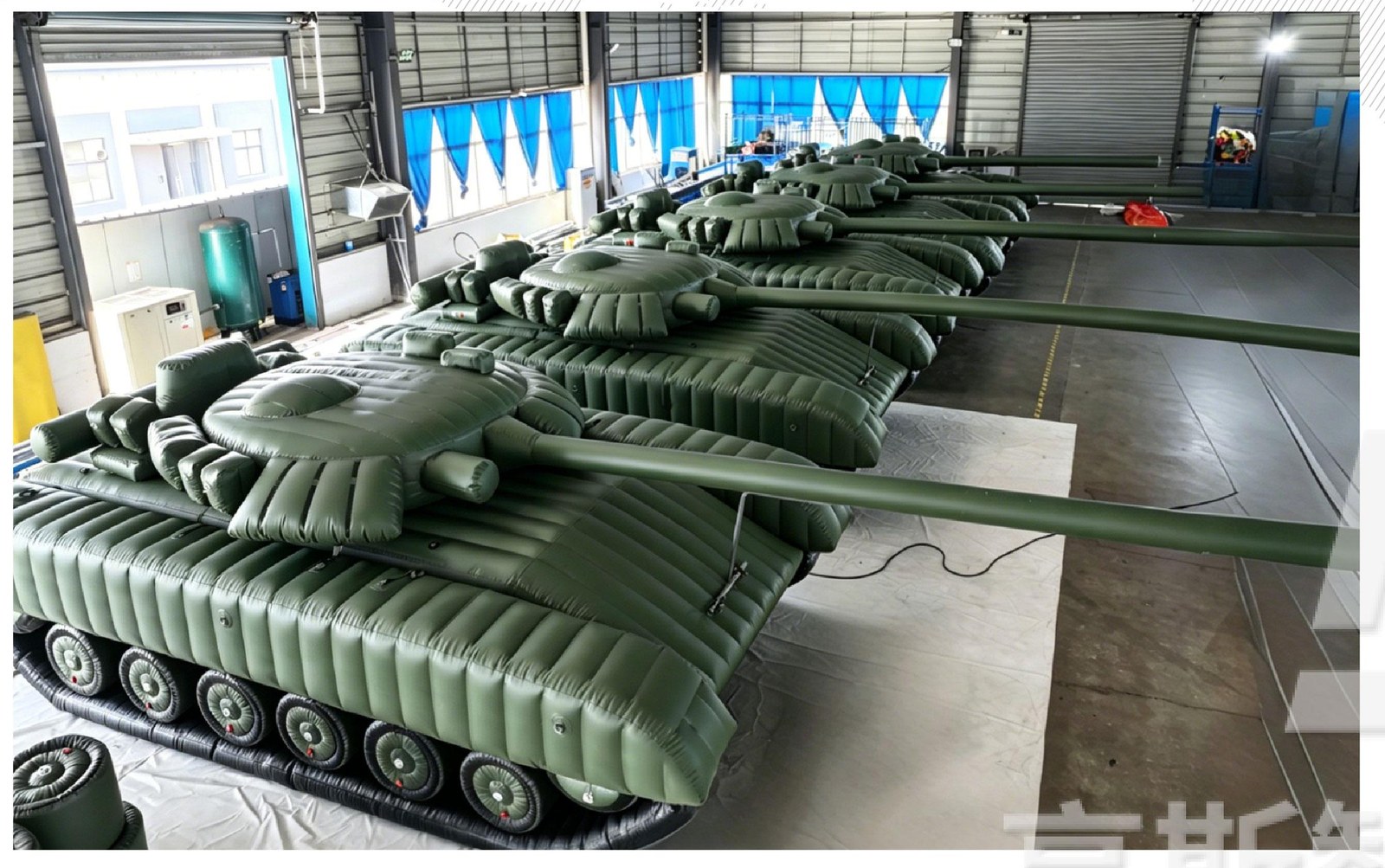
T-72 main battle tank decoy
Full-scale inflatable T-72 with accurate silhouette, road wheels and turret detail. Delivered in a transport bag and inflated on site by two operators.
Full-scale inflatable T-72 with accurate silhouette, road wheels and turret detail. Delivered in a transport bag and inflated on site by two operators.
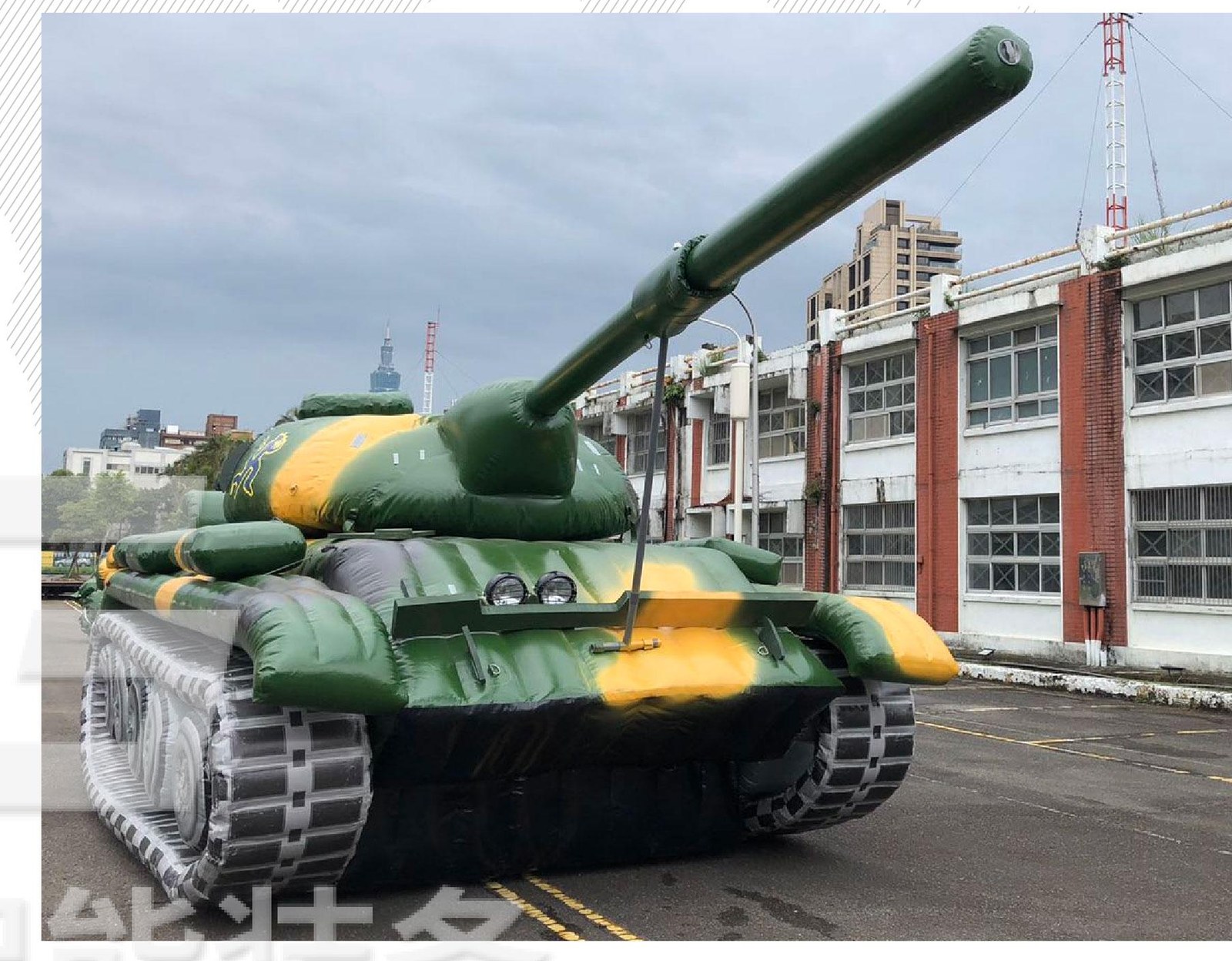
A T-59 decoy mounted on a remotely driven chassis so the vehicle can move and reposition itself across the decoy position.
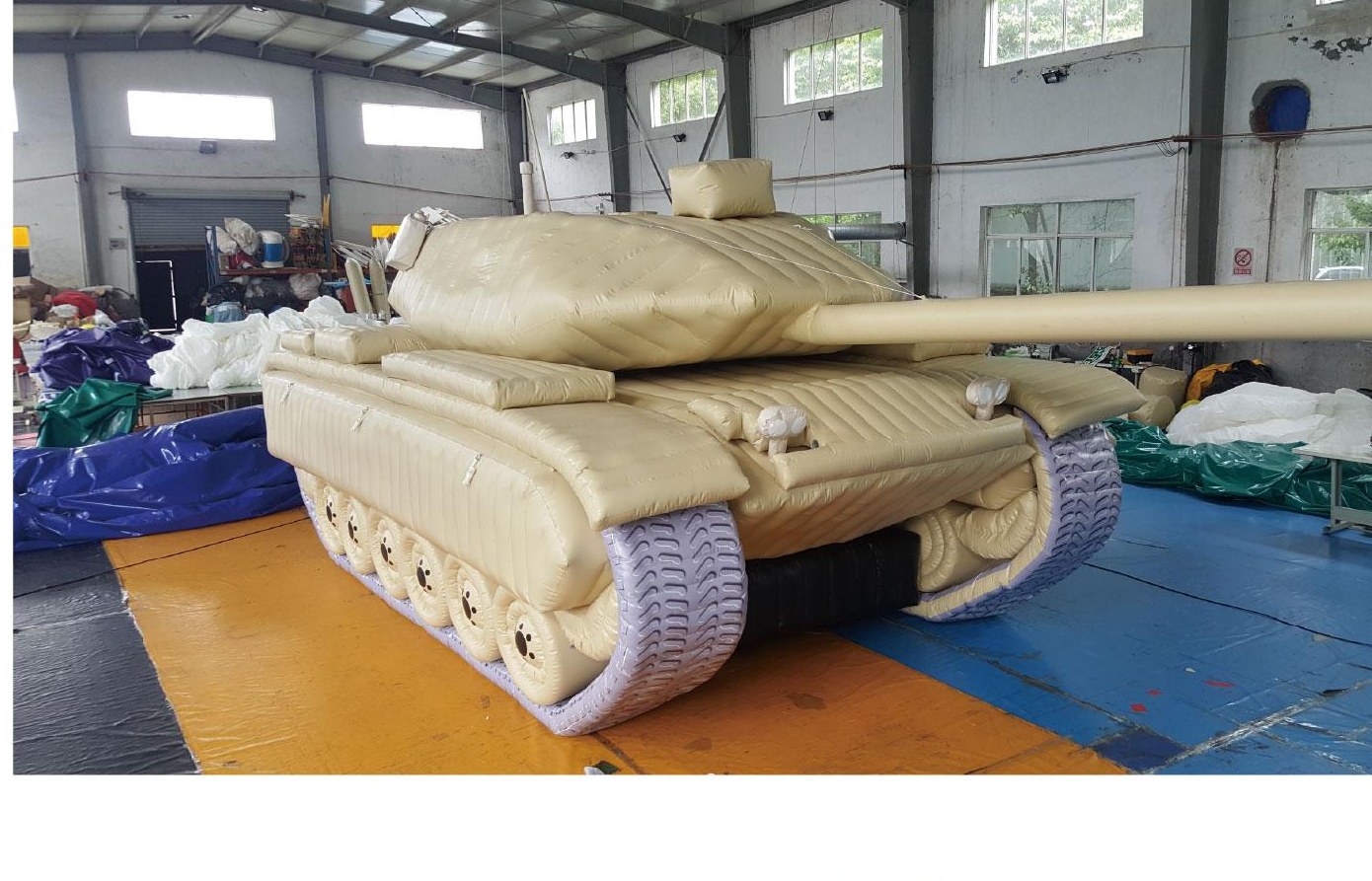
Inflatable M60T decoy with the low, elongated turret of the type, supplied in desert, NATO or customer colour schemes with optional turret rotation.
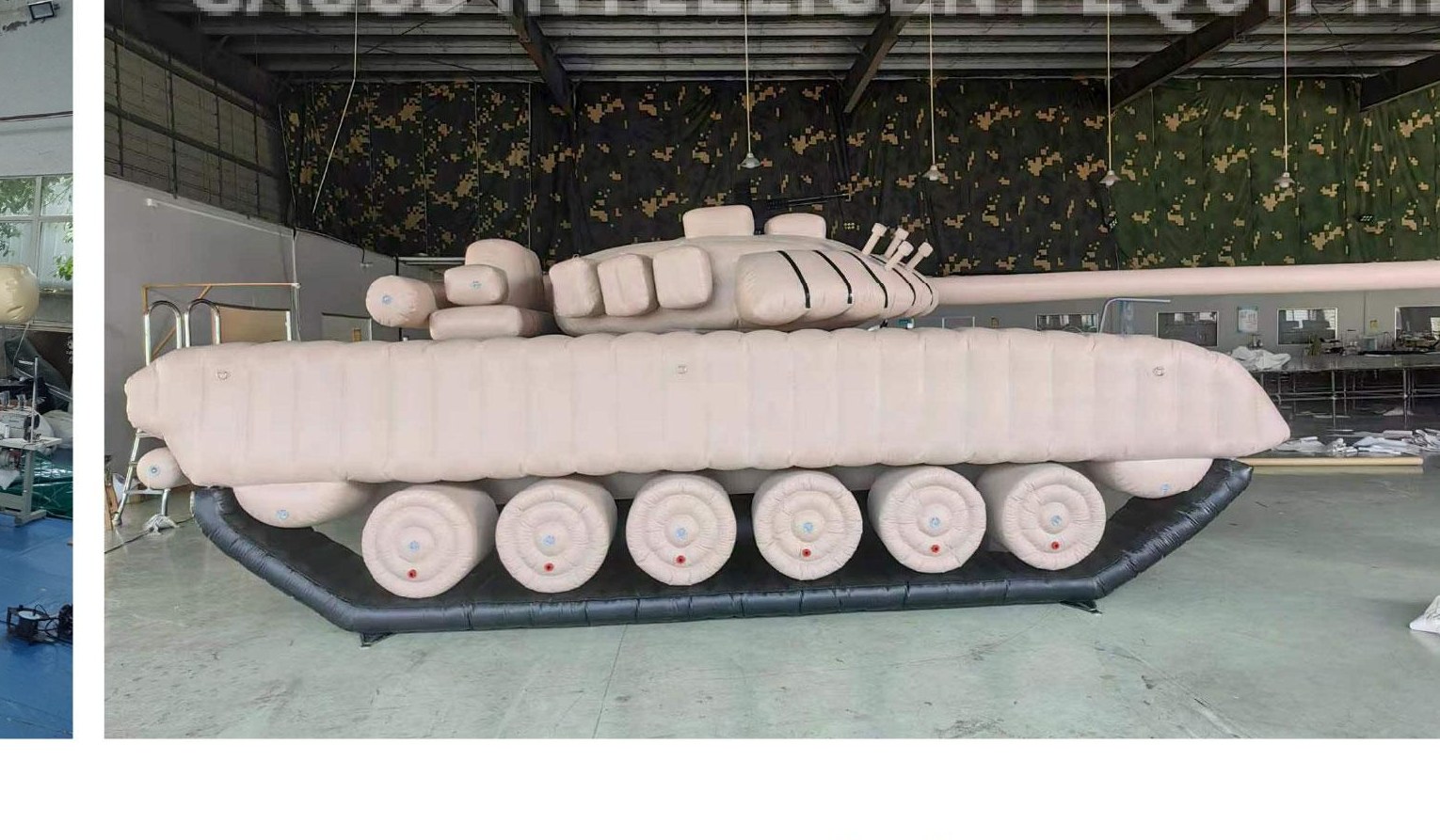
Lightweight T-72 decoy built for high-volume field orders: the same 1:1 silhouette on a thinner skin, packed two to a crate for wide decoy fields.
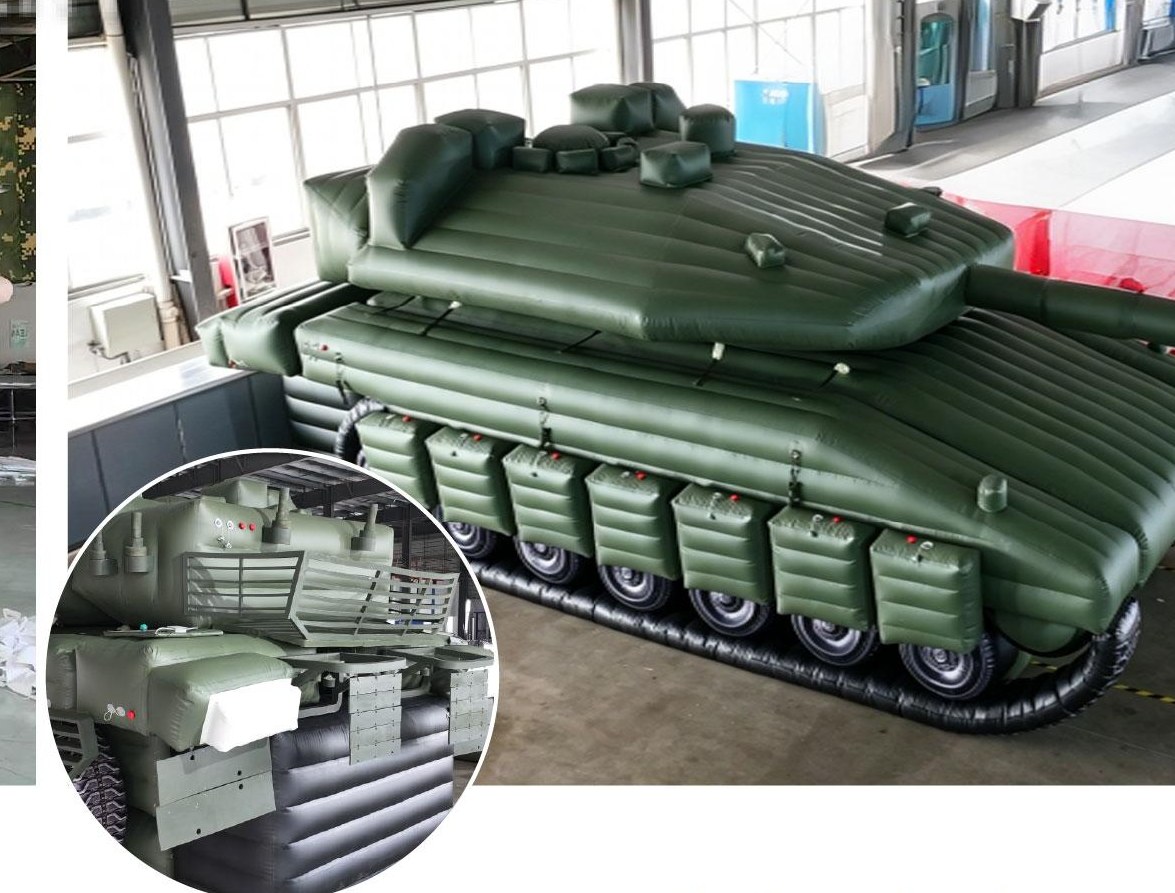
Inflatable Merkava with the distinctive turret and hull lines of the type, produced from measured drawings rather than photographs where required.
Other categories
Overview
Every armoured decoy in this family is reverse-modelled from the platform it represents: hull angles, road-wheel spacing, turret shape and barrel length are taken from measured drawings or 3D scans rather than from photographs alone. Bodies are welded from high-strength composite fabric and finished with a nano metallic coating that lowers the radar cross-section of the inflated shape.
A full-scale inflatable replica of a battle tank, built from coated high-strength fabric and inflated on site. It reproduces the silhouette, proportions and ground footprint of the real vehicle; with optional coatings it also reproduces its radar cross-section and thermal signature. Reconnaissance and targeting systems then treat the position as occupied.
Two operators position and inflate one decoy in 3 to 5 minutes using the supplied electric blower. No tools, no groundwork and no special training are needed.
Roughly 1% of the mass of the platform it represents. A main battle tank decoy can be carried, deployed and recovered by the same two-person team, on a light vehicle or on foot.
At long range the optical match is close, because every proportion is taken 1:1 from measured drawings of the real vehicle. To defeat radar and thermal sensors as well, add the metallic coating option for an adjustable radar cross-section, and the low-emissivity treatment or an active heat source for the infrared band.
The fabric and seam construction are rated for more than 200 inflation cycles in extreme field conditions. Small tears are repaired in the field with the supplied patch kit.
Yes. Camouflage patterns, unit markings, insignia and stencil text are printed to order from your reference photographs, so the decoy matches the vehicles it is standing in for.
No. The standard hull holds pressure for several days. A continuous-inflation variant is available for decoys that must stay inflated for weeks in strong wind.
The coating is rated from −40 °C to +120 °C at the surface, so the same decoy can be stored and deployed in desert, arctic and tropical theatres.
01
Choose ground that matches the terrain the real platform would occupy, and note which direction observation and imaging are most likely to come from.
02
Lay the decoy out on the marked outline and turn it so the turret and barrel face the expected sensor axis.
03
Connect the blower and inflate to working pressure — 3 to 5 minutes for a two-person team.
04
Tension the guy lines and drive the ground anchors so the decoy holds its shape in wind.
05
Install the optional radar reflector panel, heat source or smoke and acoustic units if the scenario calls for them.
06
Deflate, fold and return to the transit bag. Recovery takes the same two-person team.
07
Wash, dry and inspect seams and valves before storage so the decoy reaches its rated 200-plus cycles.
| Minimum order | From 1 set — mixed models can share one container |
| Sample lead time | 72 hours for stock patterns |
| Documentation | Bid documents, test reports and certificate of origin |
| Customisation | Camouflage, unit markings, insignia and signature options |
| Service life | Over 200 inflation cycles in field conditions |
| Lead time & payment | Lead time and payment terms confirmed on enquiry |
Swipe to see more →
Tell us the platforms you need to simulate and we will confirm specification, lead time and payment terms in writing.
Send the platform type, the signature you need and the delivery country — any platform, from any origin. You get back a written specification, a lead time and an export quotation.
Request a quotation
Tell us what you need to protect and we will come back with a configuration and an export quotation.
Thank you — your enquiry has been prepared. We reply within one working day.