Functional vehicles
Electronic warfare jammer vehicle decoy
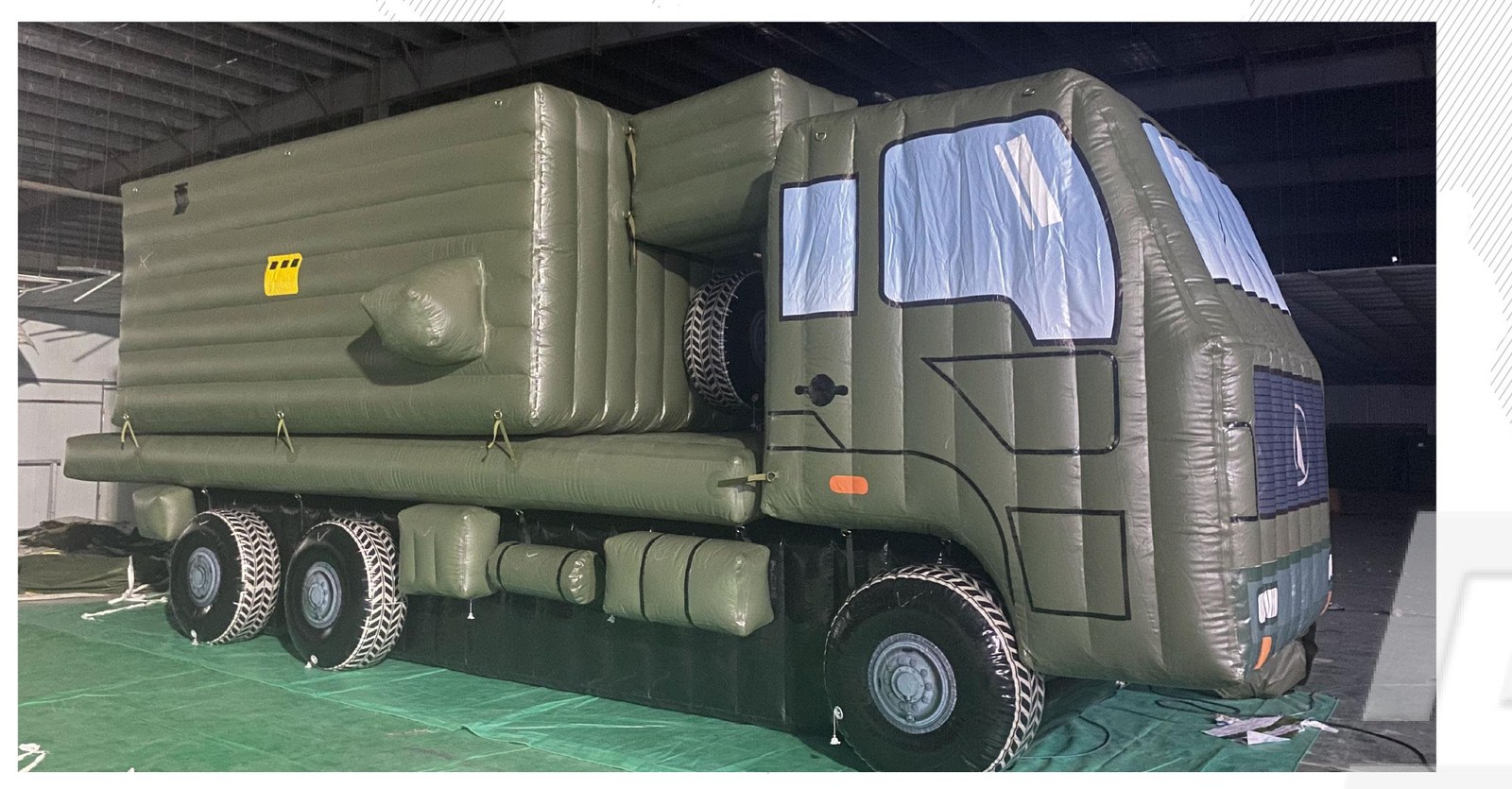
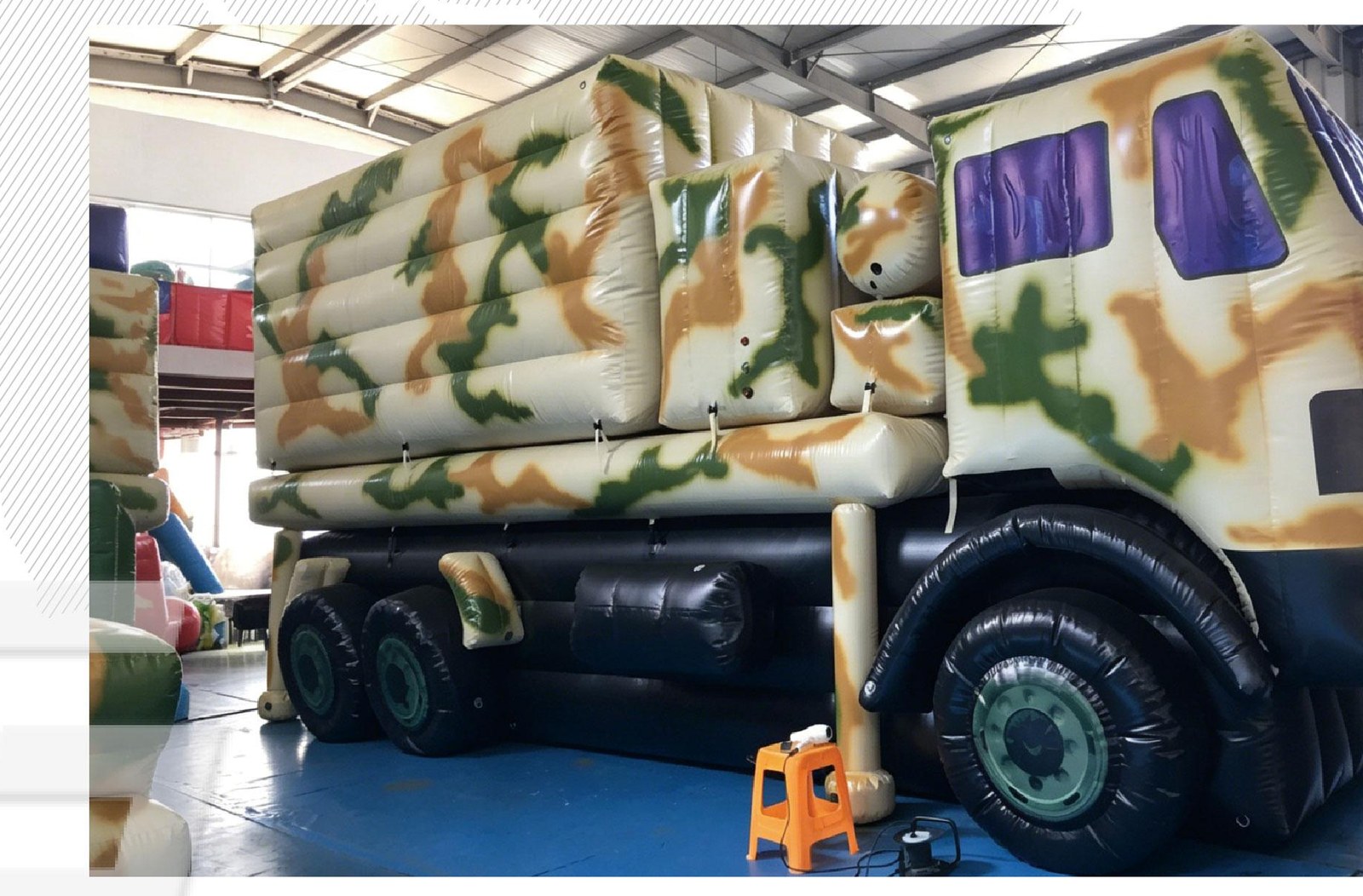
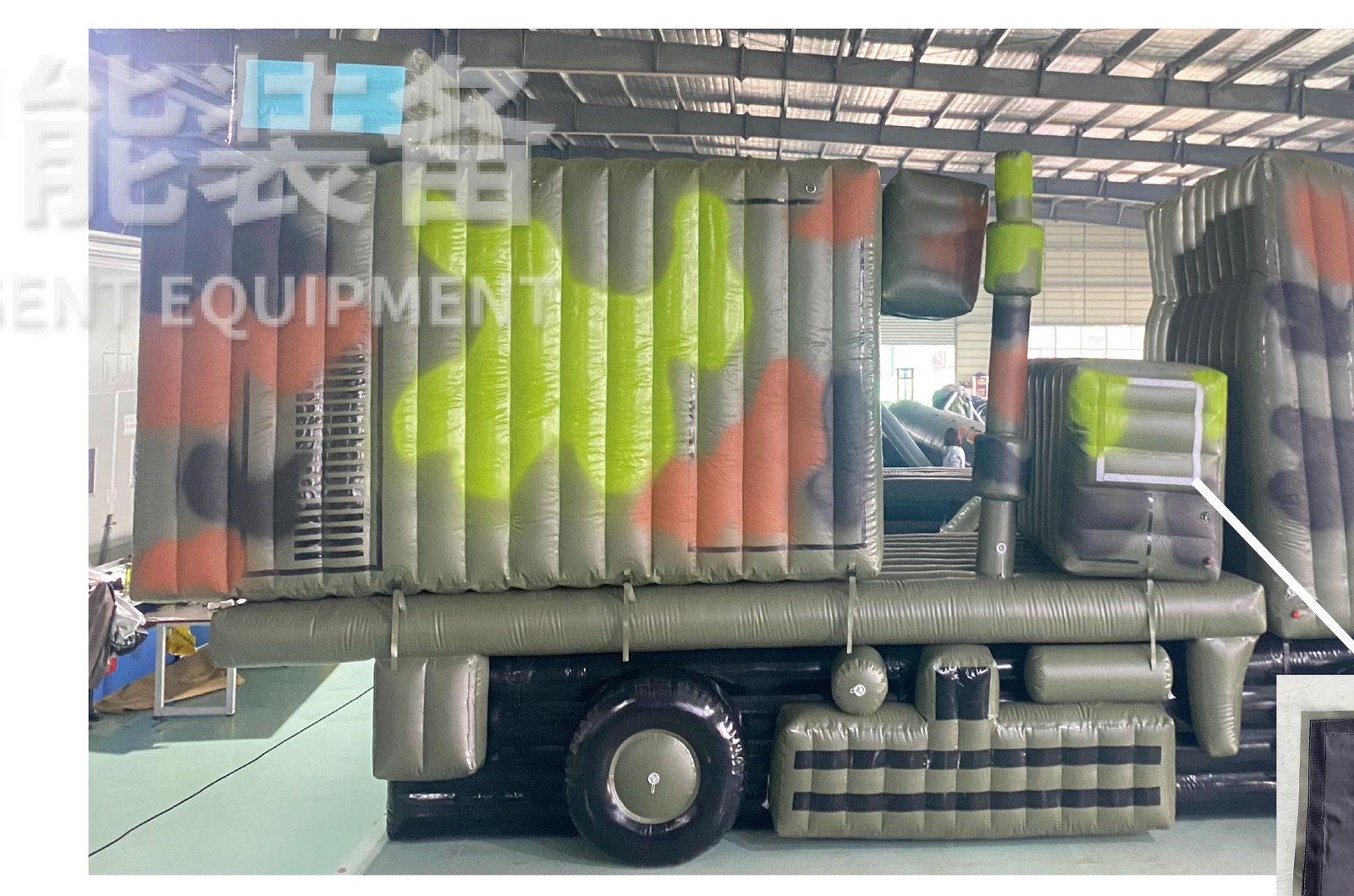
Jammer vehicle decoy with antenna and equipment-rack detail, used to draw anti-radiation weapons away from real EW platforms.
- Scale
- 1:1
- Material
- Jammer antenna array with controlled emission signature
- Inflation
- Automatic, one-key inflation
- Deployment time
- 8–12 min
01
Gallery
Product gallery
02
Functional vehicles
Product details
An electronic-warfare vehicle decoy reproducing the bulky shelter and generator set of a jammer installation. Because jammers are priority targets, the decoy is normally deployed in multiples several hundred metres apart, forcing an attacker to spend weapons on positions that hold nothing.
Functional vehicle decoys cover the support fleet that makes a position look occupied — command posts, shelter trucks, jammers and satellite communications vehicles. Each body is built over a collapsing frame, so it arrives in a transit bag and stands to full shape in minutes without a crane or a working party.
Key features
- Antenna array and rack detail reproduced
- Draws anti-radiation attack away from real assets
- Deployed by three operators
Typical applications
Electronic warfare deception · anti-radiation missile decoy · exercise marking
03
Technical specifications
Technical specifications
| Scale | 1:1 |
|---|---|
| Material | Jammer antenna array with controlled emission signature |
| Inflation | Automatic, one-key inflation |
| Deployment time | 8–12 min |
| Operating crew | 3 |
| Options | Camouflage pattern to customer specification |
04
Functional vehicles
What is included
- Vehicle hull with printed camouflage
- Shelter, mast and antenna assemblies where applicable
- Electric inflation blower
- Guy lines with ground anchors
- Repair patch kit and adhesive
- Transit and storage bag
- Operation and maintenance manual
05
Functional vehicles
Deployment
-
Plan the layout
Set out where each vehicle sits and which way masts and antennas should point, so the group matches the real layout.
-
Place and inflate the hulls
Unroll each hull on its outline and inflate to working pressure — 5 to 10 minutes per vehicle.
-
Erect masts and antennas
Raise the masts and antenna assemblies and secure the guys.
-
Anchor
Drive the anchors and tension the lines so the vehicles hold their attitude in wind.
-
Fit signature options
Install the radar reflector, heat source or remote-control package if an active signature is required.
-
Check the layout from the sensor direction
Observe the group from the likely collection axis and adjust spacing or orientation as needed.
-
Recover
Lower masts, deflate, fold and stow in sequence.
06
Functional vehicles
Frequently asked questions
Questions buyers ask about the Electronic warfare jammer vehicle decoy.
Which vehicle types can be simulated?
Command posts, shelter and communications vehicles, satellite communications and antenna vehicles, jamming platforms, transport, medical and recovery vehicles, and radar trucks. Each is reproduced 1:1 from the platform, including shelters, masts and roof equipment.
Do the vehicles carry an electromagnetic signature?
Yes, on request. Antenna and shelter configurations are reproduced together with an adjustable radar cross-section from 0.1 to 50 m² and an infrared layer, so the vehicle reads as an emitter site rather than an empty hull.
Why simulate a command or communications vehicle rather than a combat platform?
Because these are the vehicles that reconnaissance is looking for. A convincing command post or communications node draws collection effort and targeting away from the real headquarters.
How long does deployment take?
Typically 5 to 10 minutes depending on the size of the shelter and whether masts have to be erected. A two-person team is sufficient for the standard range.
Can a whole layout be built?
Yes. Vehicles can be ordered as a set — command post, communications node, radar truck and support vehicles — with a consistent signature specification so the layout reads correctly as a group.
Can masts and antennas be raised?
Yes. Masts and antenna assemblies can be supplied erectable, and the remote-control option switches signature and movement from up to 2 km away.
How durable is the fabric?
The skin is a high-strength PVC composite with a UV-stable PU coating, rated for more than 200 inflation cycles and repairable in the field.
07
Functional vehicles
Ordering and delivery
- Minimum order
- From 1 set — mixed models can share one container
- Sample lead time
- 72 hours for stock patterns
- Documentation
- Bid documents, test reports and certificate of origin
- Customisation
- Camouflage, unit markings, insignia and signature options
- Service life
- Over 200 inflation cycles in field conditions
- Lead time & payment
- Lead time and payment terms confirmed on enquiry
Tell us the platforms you need to simulate and we will confirm specification, lead time and payment terms in writing.
Enquire about this productRelated products
Send us your platform list
Tell us which vehicles, aircraft or radar sets you need to protect and we will return a configuration, a lead time and an export quotation.