WHAT THE CLIP SHOWS
A turret that traverses, a barrel that elevates
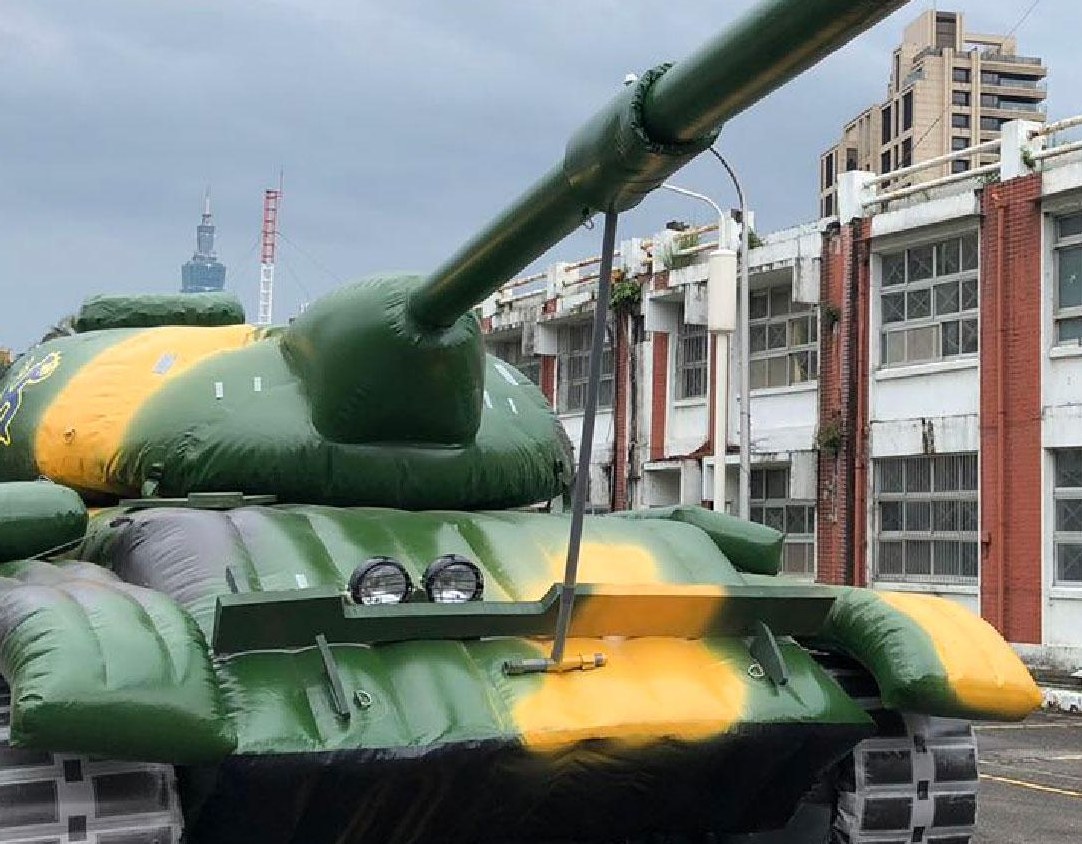
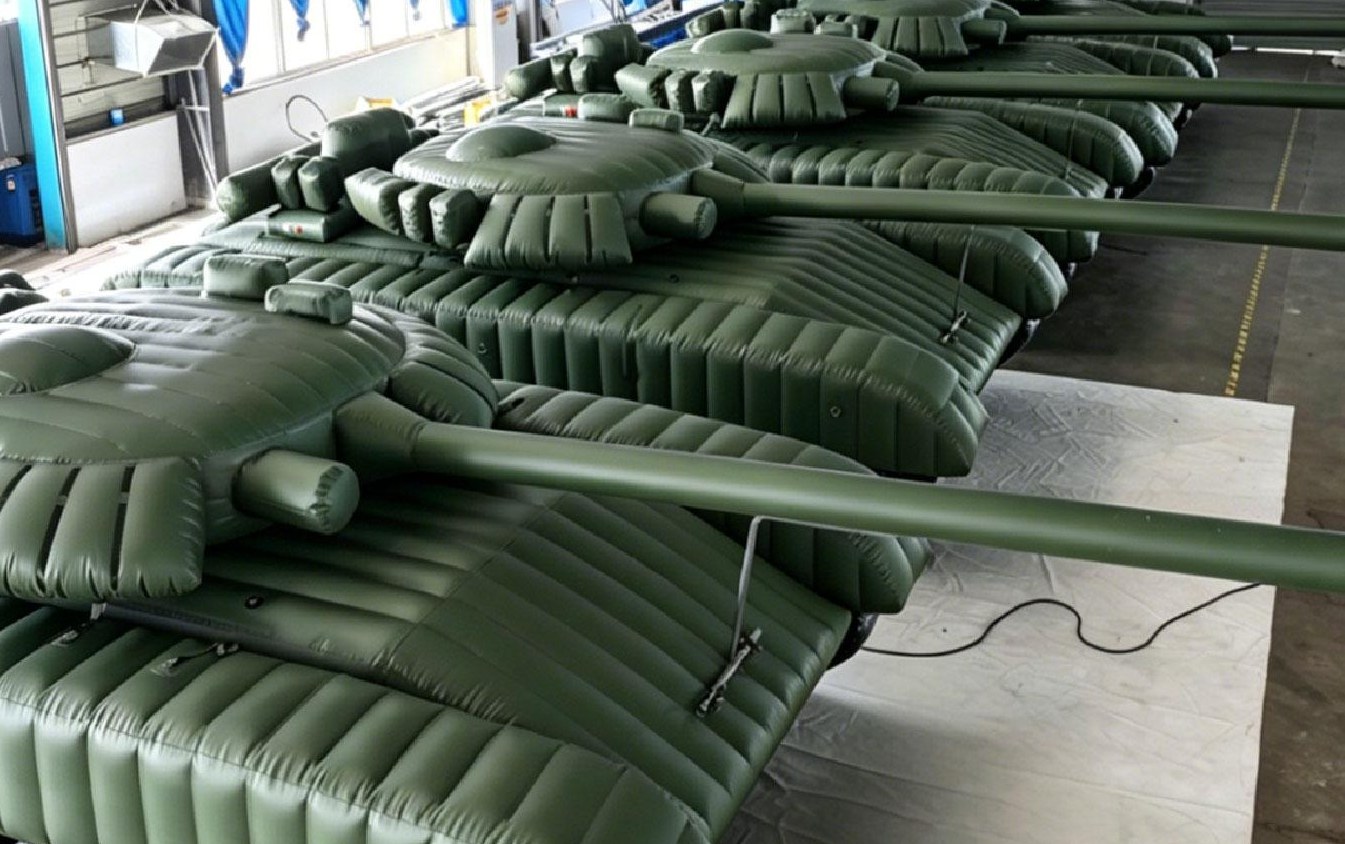
Shot vertically and close in: the turret turns through its arc, then the barrel lifts, both driven from a handheld controller rather than from inside the vehicle — because there is no inside. The movement is deliberately slow. A decoy turret that snaps from one position to another looks like a machine; one that traverses at the speed of a real traverse looks like a crew.
The clip is short because the action is short. What it demonstrates is not the range of movement but the fact that the shape changes at all between one pass and the next.
WHY IT MATTERS MORE THAN THE PAINT
Change detection is the test decoys fail
Camouflage and a good silhouette get a decoy through the first image. What defeats the second image is that something has changed: a barrel that was level and is now elevated, a turret facing a different way, a hatch that was closed and is now open. Movement costs a drive unit and a battery, and it is the difference between a target attacked once and a position that keeps drawing reconnaissance.
It also buys time. A position that looks live on a second pass is a position that gets re-attacked, and every strike spent on it is a strike not spent somewhere real.
WHAT IT TAKES TO KEEP MOVING
Power, control and repacking
The drive is part of the decoy, not an accessory bolted on afterwards: the skin is cut to accept it, and the pack still folds flat with the unit in place. Control is handheld and line of sight, and the unit runs from the same vehicle supply used for the blower, so a deployment does not need a second power source.
Maintenance is a visual check of the drive and a charge before deployment — the same ten minutes a crew spends on any other equipment before a move. Where a customer wants movement without a motor, the same turret can be supplied on a manual ring that two people turn by hand.
Latest uploads
More footage
Want to see a specific test or drill?
Tell us the question and we will film the answer.