WHAT THE CLIP SHOWS
One decoy, two operators, no tools
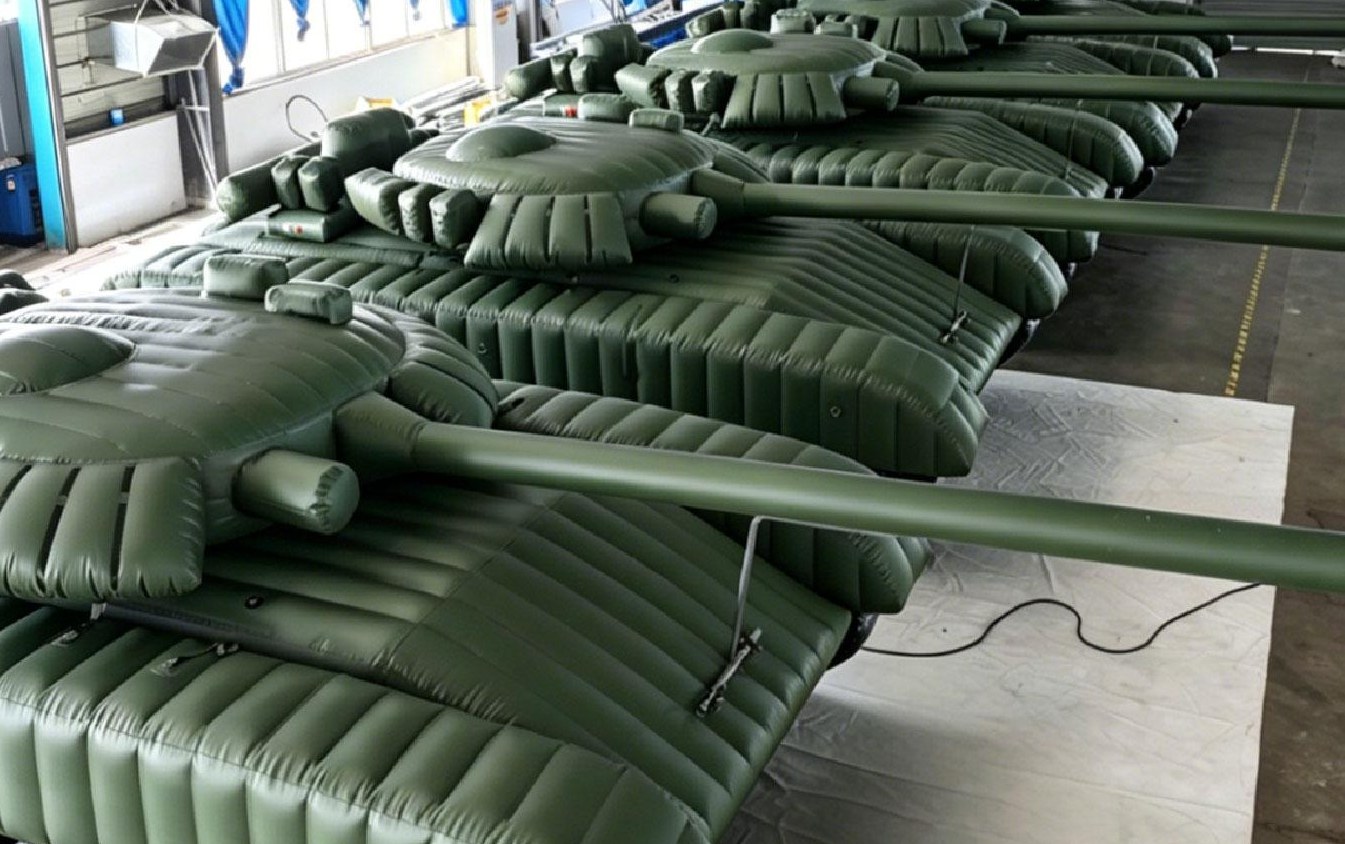
The camera does not move. A transit bag comes off the tailgate of a light vehicle, the skin is carried to the marked position and unfolded along the axis of the hull, and a single electric blower is connected at the rear. Three to five minutes later the shape is standing, and the two operators walk the vehicle while it settles — checking that the turret ring has not twisted and that the barrel points where the position plan says it should.
Nothing in the sequence needs a tool, a foundation or a prepared pad. That is the point of the design. A decoy that needs a working party arrives late, and a decoy field that takes a day to build has already been photographed by the time it is finished.
WHY TWO PEOPLE IS THE NUMBER THAT MATTERS
Crew size is a logistics decision
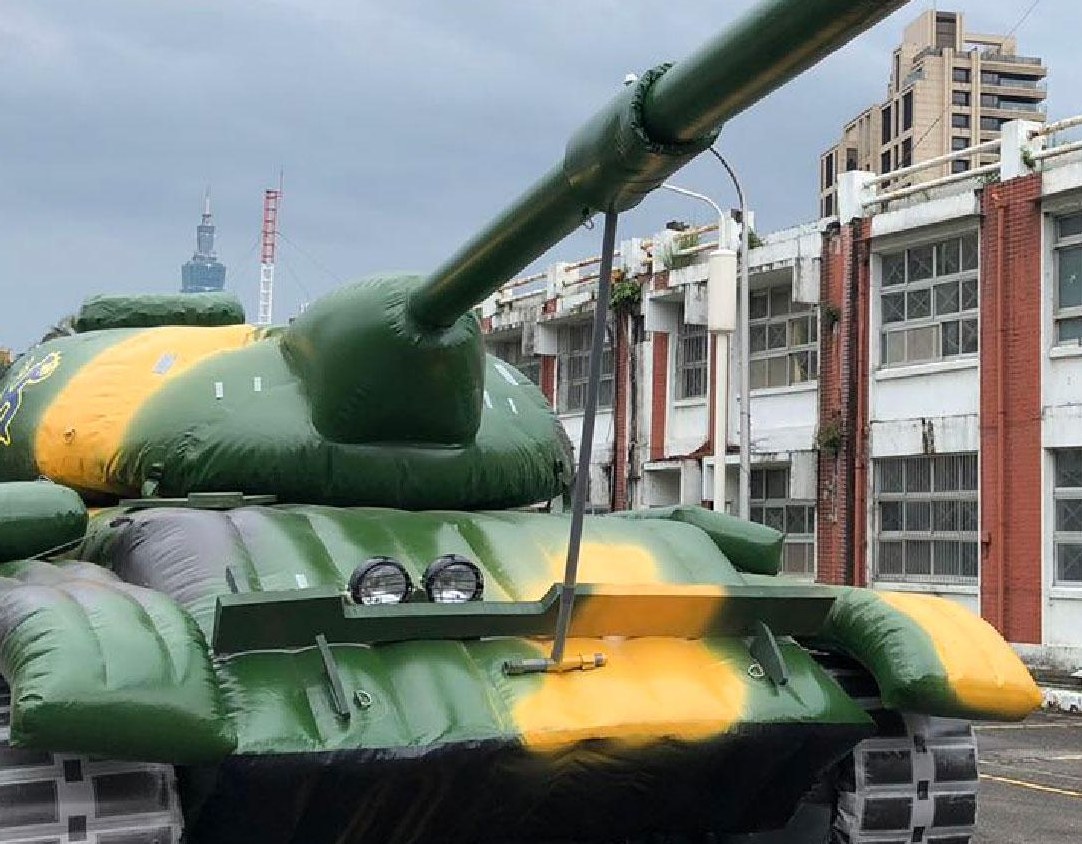
Specification sheets quote crew as a single number, but the number really answers a different question: how many positions can a unit move in one night? Two operators and a light vehicle can lift, carry and inflate the armour family without a crane, and a packed decoy weighs roughly one per cent of the platform it represents — a T-72 decoy is a bag two people can handle, not a trailer that needs a recovery vehicle.
It also sets the training bill. There is no specialisation inside the crew: the two people who inflate a tank inflate the next one and the one after that, which is what a twenty-position field actually demands.
WHAT HOLDS IT UP AFTER DARK
Pressure, seams and anchors
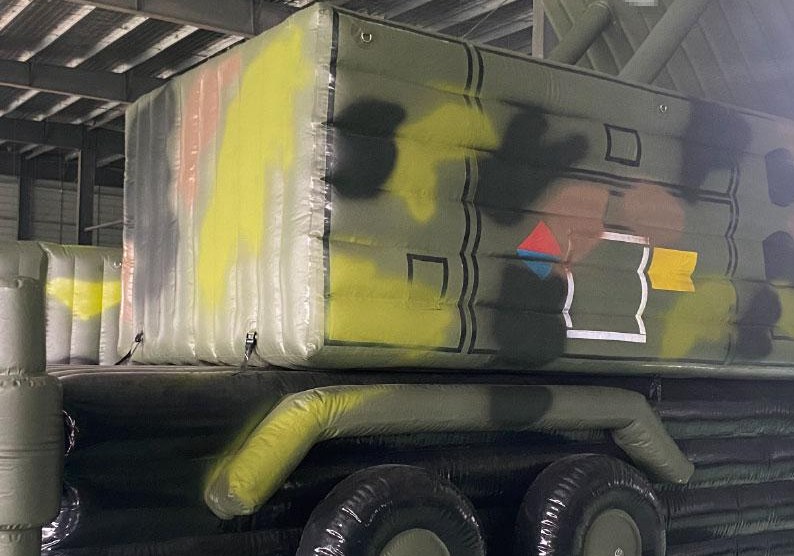
Inflation is the visible half. The other half is what keeps the shape readable a week later: high-frequency welded seams rather than stitched ones, pressure that is held rather than topped up by hand, and anchor points laid out so the skin does not creep in wind.
Repacking matters as much. A decoy folded wet and left in the bag comes out with creases that read as damage in the silhouette, so crews are taught to dry it and fold along the same lines every time.
Latest uploads
More footage
Want to see a specific test or drill?
Tell us the question and we will film the answer.