Inflatable hangars for austere airfields
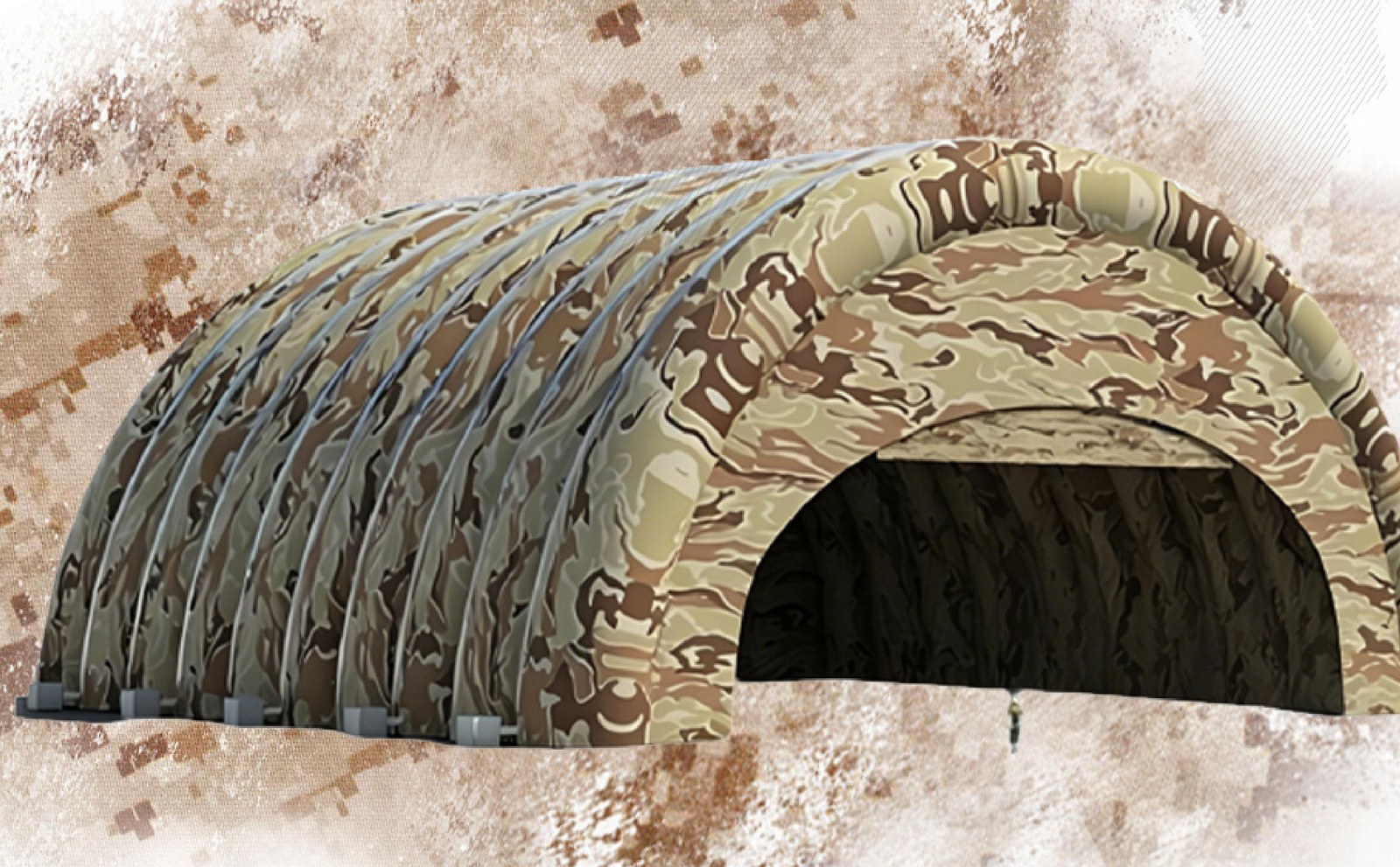
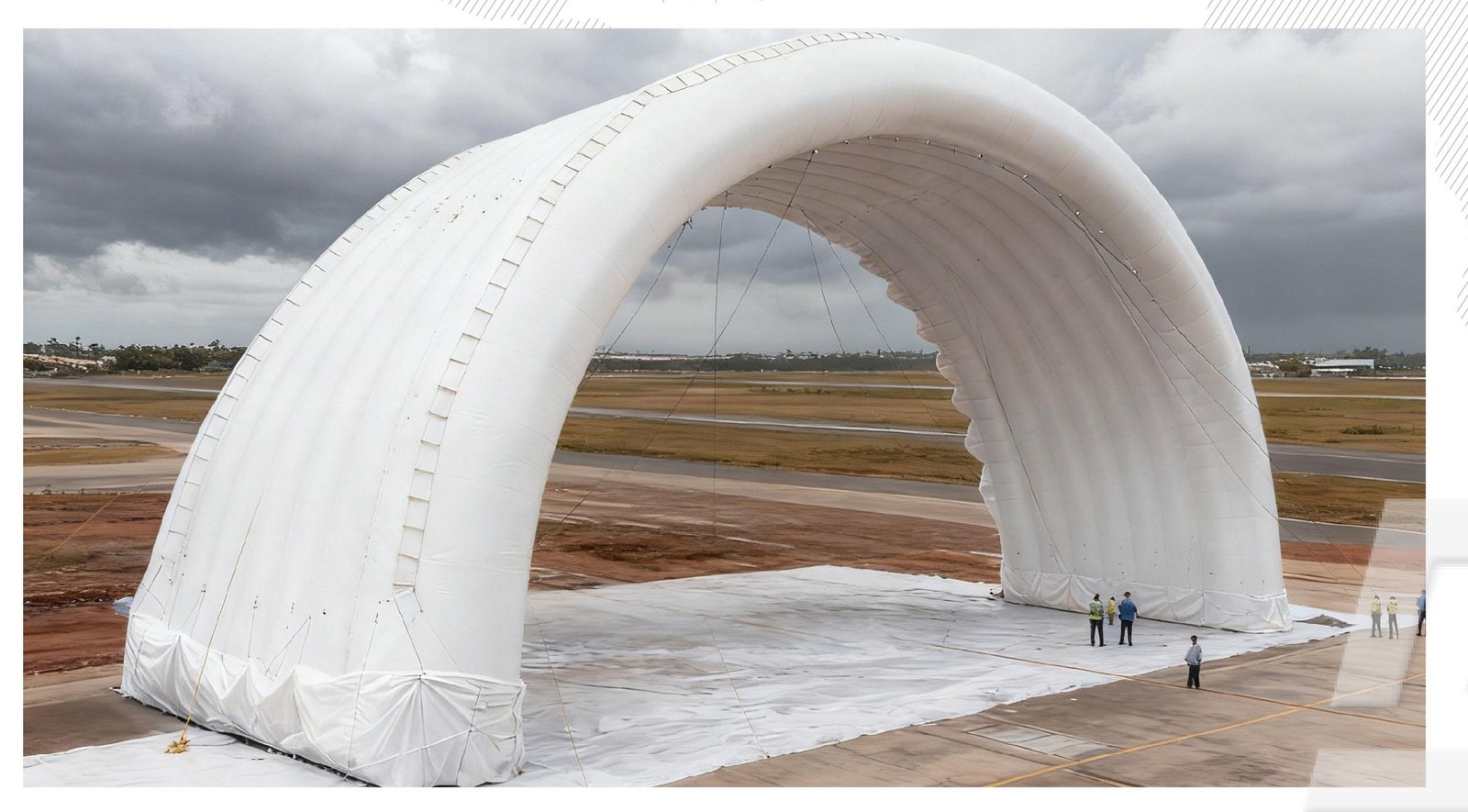
Aircraft shelter is usually the constraint that stops a forward operating location from being useful. Permanent construction is slow, expensive and immovable; a tensioned tent cannot span a fast jet. A structural inflatable hangar sits between the two.
Span, height and door opening
The clear span determines what can be parked inside; the door opening determines what can get there. A 40-metre hangar is normally specified with a door sized for the aircraft's tail height and wing span, and the door is usually the hardest part of the design to keep light. Decide the airframe first, the hangar second.
Holding pressure, holding a shape
An inflatable building is only a building while it is pressurised. Our systems use a PLC pressure-control unit that maintains internal pressure automatically, compensates for temperature change and door openings, and raises an alarm if pressure falls. That unit — and the power to run it — is the part most often forgotten in planning.
Anchoring on ground you do not own
Wind is the design case that matters. Anchoring options include ground anchors, sandbagging, concrete ballast and combinations, chosen for the soil and the local wind record. We supply a wind anchoring kit rated for the site; where the ground will not take anchors, ballast is used instead.
What to ask for
- Clear span and internal height
- Door type and opening size
- Anchoring method for the soil and wind load
- Pressure control unit, alarm and power requirement
- Ventilation, lighting and heating options
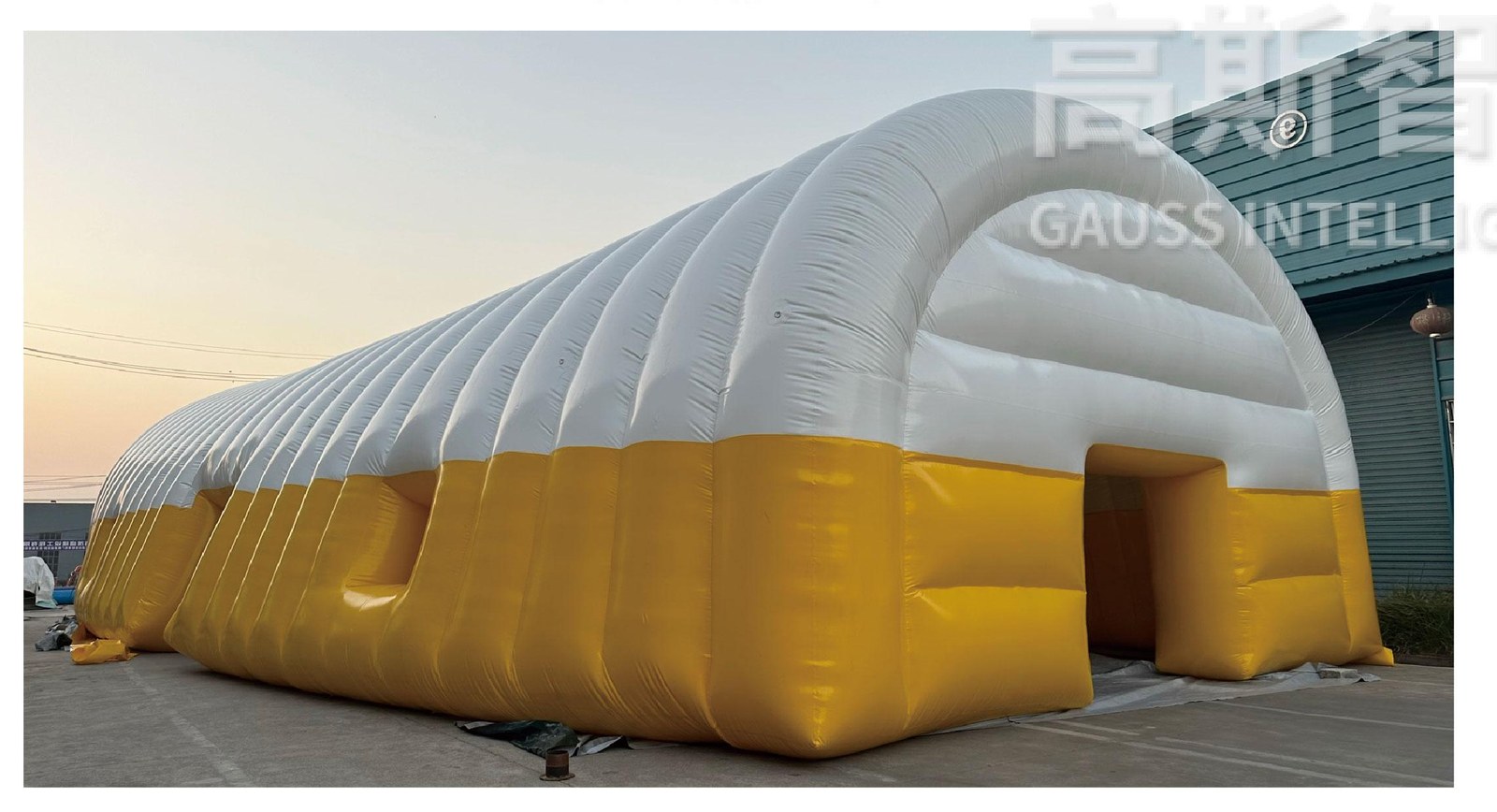
Systems are supplied with a control cabinet, anchoring kit and documentation, and can be configured for use as workshops, stores, medical facilities or troop accommodation rather than aircraft shelter alone.