Helium surveillance balloon
A small helium-filled balloon on a two-axis stabilised turret, giving persistent day and night coverage over a 5 km radius with very low operating cost.
- Coverage radius
- 5 km
- Payload
- Electro-optical turret, dual-axis stabilised
- Operating altitude
- 300 m
- Continuous flight
- Continuous, helium filled
Product gallery
Product details
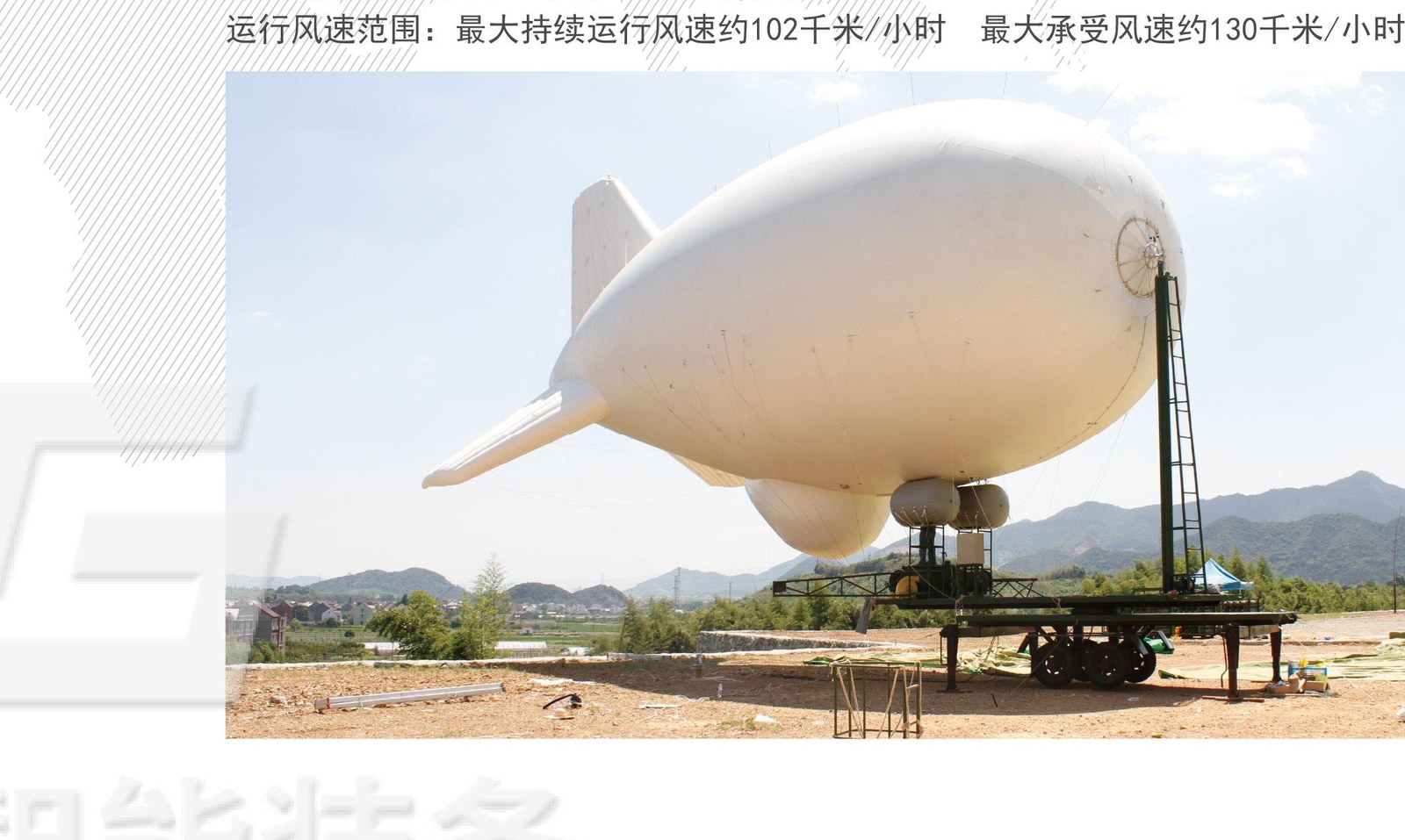
A low-cost surveillance balloon for persistent observation at fixed sites. The helium-filled balloon carries a stabilised camera pod to a coverage radius of about five kilometres, and the ground station gives the operator a direct view and recorded imagery. The system is designed for two-person handling and for storage in a small vehicle.
Aerostats use a helium-filled aerodynamic envelope with a mooring and control system for continuous observation. The envelope is coated for UV and abrasion resistance, the tether carries power and data, and the ground station presents the operator with stabilised daylight and thermal imagery — a platform that stays on task for days rather than hours.
Key features
- 360° coverage over a 5 km radius
- Day and night, non-flammable helium lift
- Rapid launch and recovery by two operators
Typical applications
Border and coastal watch · area patrol · search and rescue · event security
Technical specifications
| Coverage radius | 5 km |
|---|---|
| Payload | Electro-optical turret, dual-axis stabilised |
| Operating altitude | 300 m |
| Continuous flight | Continuous, helium filled |
| Operating crew | 2 |
| Options | High-definition imagery · real-time downlink |
What is included
- Helium envelope with bridle and fins
- Mooring mast, winch and tether
- Payload turret or communications package
- Helium handling and top-up equipment
- Ground control station and power supply
- Transport cases for envelope, mast and payload
- Operation and maintenance manual
Deployment
-
Survey the site
Choose an open position with clear sightlines in the required sector, and check the airspace restrictions that apply.
-
Install the mooring system
Set the mast and winch and anchor them to the site ground conditions.
-
Inflate the envelope
Fill the envelope with helium to the specified pressure and check it for leaks.
-
Fit the payload
Attach the electro-optical turret, radar or communications package and connect power and data.
-
Launch and tension
Pay out the tether and raise the aerostat to operating height, then set the tether tension.
-
Bring the sensor on line
Calibrate the turret or radar against known references and hand over to the ground control station.
-
Recover for servicing
Winch down, deflate or top up helium, and inspect the envelope, tether and payload.
Frequently asked questions
Questions buyers ask about the Helium surveillance balloon.
What does a tethered aerostat system consist of?
A helium-filled envelope, a mooring and winch system, and a payload — normally an electro-optical turret, a synthetic aperture radar, or a communications package. The whole system is designed to be transported and set up by the operating unit.
How long can it stay aloft?
The tethered observation system operates continuously for about a week before it is brought down for helium top-up and inspection.
How far can it see?
The integrated electro-optical turret and synthetic aperture radar track targets in real time out to roughly a 50 km radius, using the mast height to see well beyond the horizon a ground sensor could cover.
What wind can it operate in?
The system is rated to operate in winds up to Beaufort 7, and the mooring system holds the envelope stable enough for the payload to keep tracking.
Does it work in extreme cold?
Yes. The system runs stably at plateau and high-altitude sites down to −40 °C, which is where a tower or mast becomes impractical.
Can it also provide communications?
Yes. A tethered communications variant carries 5G base station equipment and a satellite backhaul link, giving roughly a 20 km coverage circle that can be established within hours of arriving at a site with no working network.
Where is it used?
Border surveillance, disaster communications, meteorological monitoring and forest fire detection, where the requirement is persistence rather than speed.
Ordering and delivery
- Minimum order
- From 1 set — mixed models can share one container
- Sample lead time
- 72 hours for stock patterns
- Documentation
- Bid documents, test reports and certificate of origin
- Customisation
- Camouflage, unit markings, insignia and signature options
- Service life
- Over 200 inflation cycles in field conditions
- Lead time & payment
- Lead time and payment terms confirmed on enquiry
Tell us the platforms you need to simulate and we will confirm specification, lead time and payment terms in writing.
Enquire about this productRelated products
Send us your platform list
Tell us which vehicles, aircraft or radar sets you need to protect and we will return a configuration, a lead time and an export quotation.