Ballon de surveillance à l'hélium
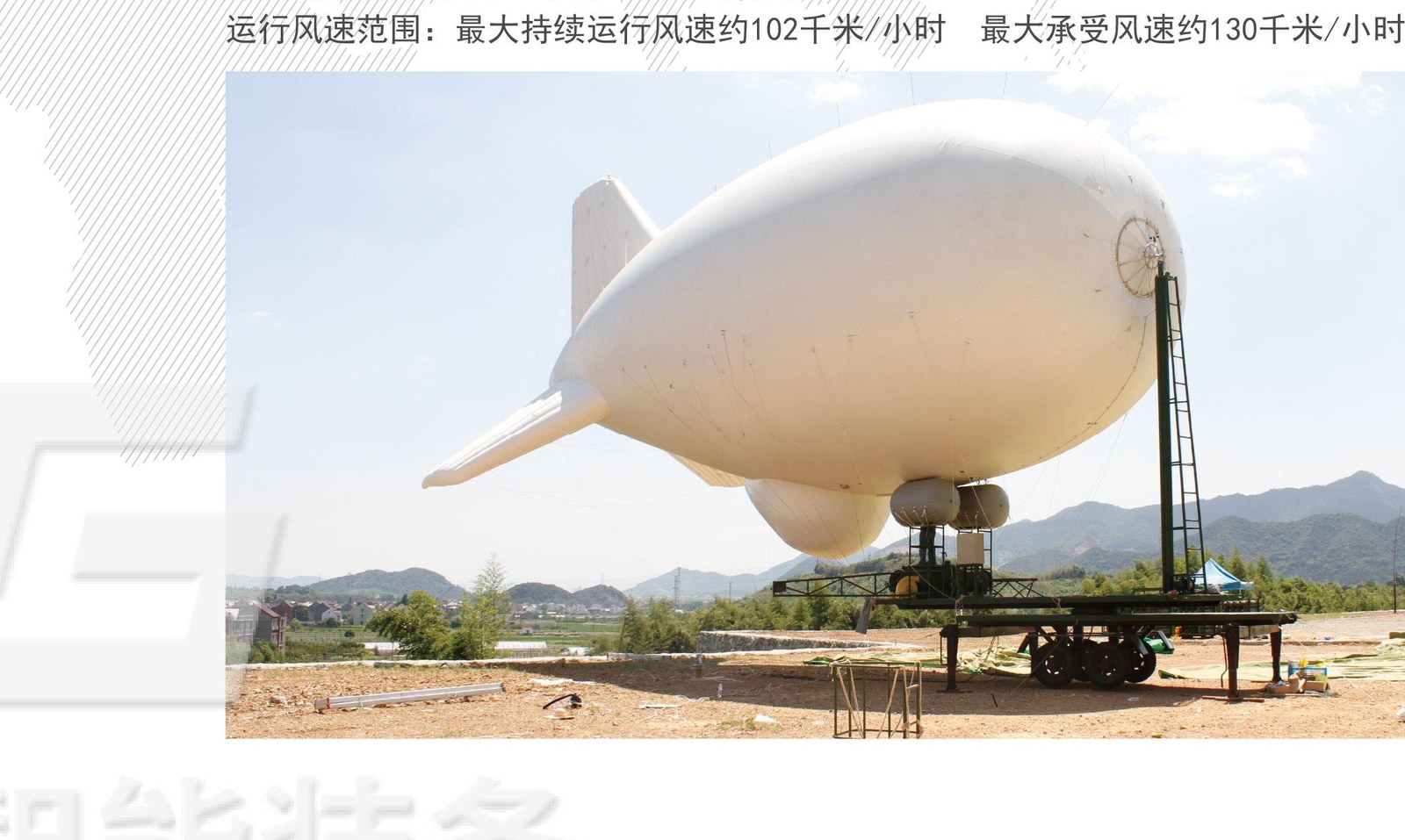
Petit ballon gonflé à l'hélium sur tourelle stabilisée deux axes : couverture jour et nuit permanente sur 5 km de rayon, à très faible coût d'exploitation.
- Rayon de couverture
- 5 km
- Charge utile
- Electro-optical turret, dual-axis stabilised
- Altitude d'emploi
- 300 m
- Vol continu
- Continuous, helium filled
Galerie du produit
Détails du produit
Un ballon de surveillance économique pour l'observation permanente sur sites fixes. Gonflé à l'hélium, il emporte une nacelle caméra stabilisée sur un rayon de couverture d'environ cinq kilomètres, et la station au sol offre à l'opérateur une vue directe et des images enregistrées. Le système est prévu pour deux personnes et pour le stockage dans un véhicule léger.
Les aérostats utilisent une enveloppe aérodynamique gonflée à l'hélium, associée à un système d'amarrage et de conduite pour l'observation continue. L'enveloppe est revêtue pour résister aux UV et à l'abrasion, le câble transporte l'énergie et les données, et la station au sol présente à l'opérateur des images jour et thermiques stabilisées — une plateforme qui reste en service des journées entières plutôt que des heures.
Caractéristiques clés
- Couverture 360° sur 5 km de rayon
- Jour et nuit, portance hélium ininflammable
- Mise en œuvre rapide à deux opérateurs
Applications typiques
Veille frontalière et côtière · patrouille de zone · recherche et sauvetage · sécurité événementielle
Spécifications techniques
| Rayon de couverture | 5 km |
|---|---|
| Charge utile | Electro-optical turret, dual-axis stabilised |
| Altitude d'emploi | 300 m |
| Vol continu | Continuous, helium filled |
| Équipe d'exploitation | 2 |
| Options | High-definition imagery · real-time downlink |
Contenu de la livraison
- Helium envelope with bridle and fins
- Mooring mast, winch and tether
- Payload turret or communications package
- Helium handling and top-up equipment
- Ground control station and power supply
- Transport cases for envelope, mast and payload
- Operation and maintenance manual
Mise en œuvre
-
Survey the site
Choose an open position with clear sightlines in the required sector, and check the airspace restrictions that apply.
-
Install the mooring system
Set the mast and winch and anchor them to the site ground conditions.
-
Inflate the envelope
Fill the envelope with helium to the specified pressure and check it for leaks.
-
Fit the payload
Attach the electro-optical turret, radar or communications package and connect power and data.
-
Launch and tension
Pay out the tether and raise the aerostat to operating height, then set the tether tension.
-
Bring the sensor on line
Calibrate the turret or radar against known references and hand over to the ground control station.
-
Recover for servicing
Winch down, deflate or top up helium, and inspect the envelope, tether and payload.
Questions fréquentes
Les questions que posent les acheteurs sur le Ballon de surveillance à l'hélium.
What does a tethered aerostat system consist of?
A helium-filled envelope, a mooring and winch system, and a payload — normally an electro-optical turret, a synthetic aperture radar, or a communications package. The whole system is designed to be transported and set up by the operating unit.
How long can it stay aloft?
The tethered observation system operates continuously for about a week before it is brought down for helium top-up and inspection.
How far can it see?
The integrated electro-optical turret and synthetic aperture radar track targets in real time out to roughly a 50 km radius, using the mast height to see well beyond the horizon a ground sensor could cover.
What wind can it operate in?
The system is rated to operate in winds up to Beaufort 7, and the mooring system holds the envelope stable enough for the payload to keep tracking.
Does it work in extreme cold?
Yes. The system runs stably at plateau and high-altitude sites down to −40 °C, which is where a tower or mast becomes impractical.
Can it also provide communications?
Yes. A tethered communications variant carries 5G base station equipment and a satellite backhaul link, giving roughly a 20 km coverage circle that can be established within hours of arriving at a site with no working network.
Where is it used?
Border surveillance, disaster communications, meteorological monitoring and forest fire detection, where the requirement is persistence rather than speed.
Commande et livraison
- Quantité minimum
- À partir d'un ensemble — plusieurs modèles peuvent partager un conteneur
- Délai pour un échantillon
- 72 heures pour les modèles en stock
- Documentation
- Documents d'appel d'offres, rapports d'essai et certificat d'origine
- Personnalisation
- Camouflage, marquages d'unité, insignes et options de signature
- Durée de service
- Plus de 200 cycles de gonflage en conditions de terrain
- Délais et paiement
- Délais et conditions de paiement confirmés sur demande
Indiquez-nous les plateformes à simuler et nous confirmerons par écrit les spécifications, les délais et les conditions de paiement.
Demander ce produitProduits associés
Envoyez-nous votre liste de plateformes
Indiquez les véhicules, aéronefs ou radars à protéger : nous vous renvoyons une configuration, un délai et un devis d'export.